Ever flipped a record over and found "Not For Sale" printed on the label? You're holding a promo, and promo vinyl records are one of the most misunderstood corners of the second-hand crates. At our Mansfield record shop we see them every week: white labels, A-label demos, factory samples, DJ 12"s and the odd test pressing. This guide explains what each one actually is, how to tell them apart, and why "promo" on a listing isn't the same as "rare". Every example below is a real copy in stock as we write, photographed as the exact record you'd get.
No invented values and no "only three exist" stories, just the label tells we check on the shop floor.
What is a promo copy?
A promo (promotional copy) is a record the label gave away before or around release. They went free to radio stations, DJs, journalists and shop buyers so the record got played, reviewed and ordered. That's why so many say "Not For Sale", "Demonstration Record" or "Promo Use Only" somewhere on the label or sleeve.
Most promos play exactly the same music as the shop copy. Some don't: radio edits, alternative mixes or a different B-side all turn up. That difference matters far more to collectors than the "Not For Sale" wording on its own, so it's the first thing to check.
Promos, white labels and test pressings get lumped together in listings, but they're three different things made for three different jobs. Mixing them up is how people overpay.
A-label demos: the big "A" on UK 7"s
From the 1950s to the 1970s, UK labels sent singles out as "A-label demos". They had a large "A" printed on the label so the DJ or reviewer knew exactly which side to play, and many carried a planned release date too.
Each company had its own design, which is handy for dating a single:
- EMI: white with a red "A" in the early 60s, then green with a white "A" from 1967 to about 1972. From 1972, ordinary labels were overprinted "DEMO RECORD NOT FOR SALE" with a much smaller black "A".
- Decca: mid-60s demos had "pedestrian crossing" stripes round the edge of the label.
- CBS: from about 1966, white labels with a big orange "A".
- RCA: once it pressed its own records, it kept the normal label design and added a small hollow "A" and "Demonstration Sample Not For Sale".
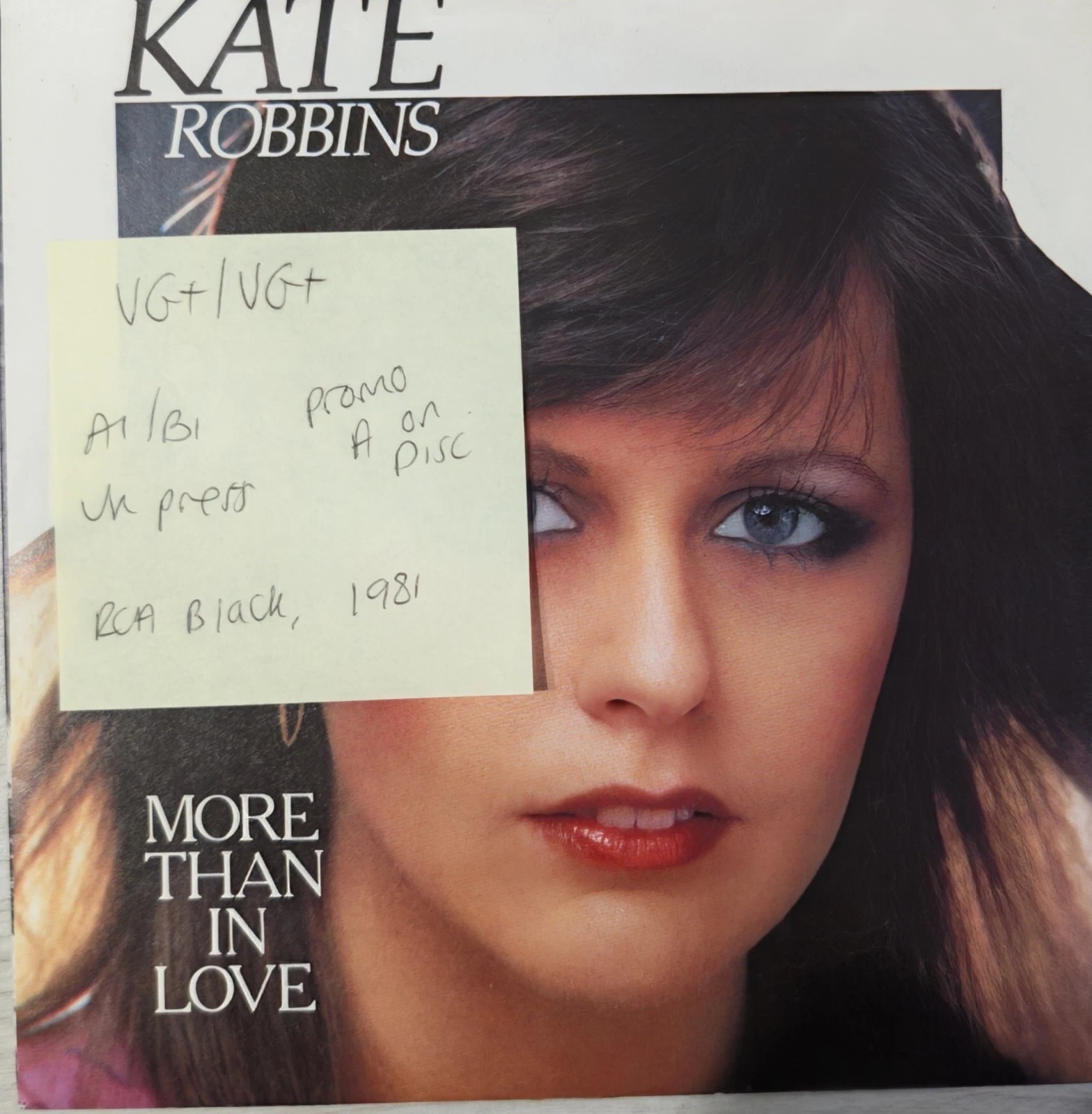
Here's an RCA promo from 1981: Kate Robbins And Beyond – More Than In Love 7" (RCA 69), graded VG+/VG+, £3. Our notes say promo, with an "A" on the disc, which fits RCA's demo style of the period. Even the picture sleeve marks the sides "(A) More Than In Love (B) Now".
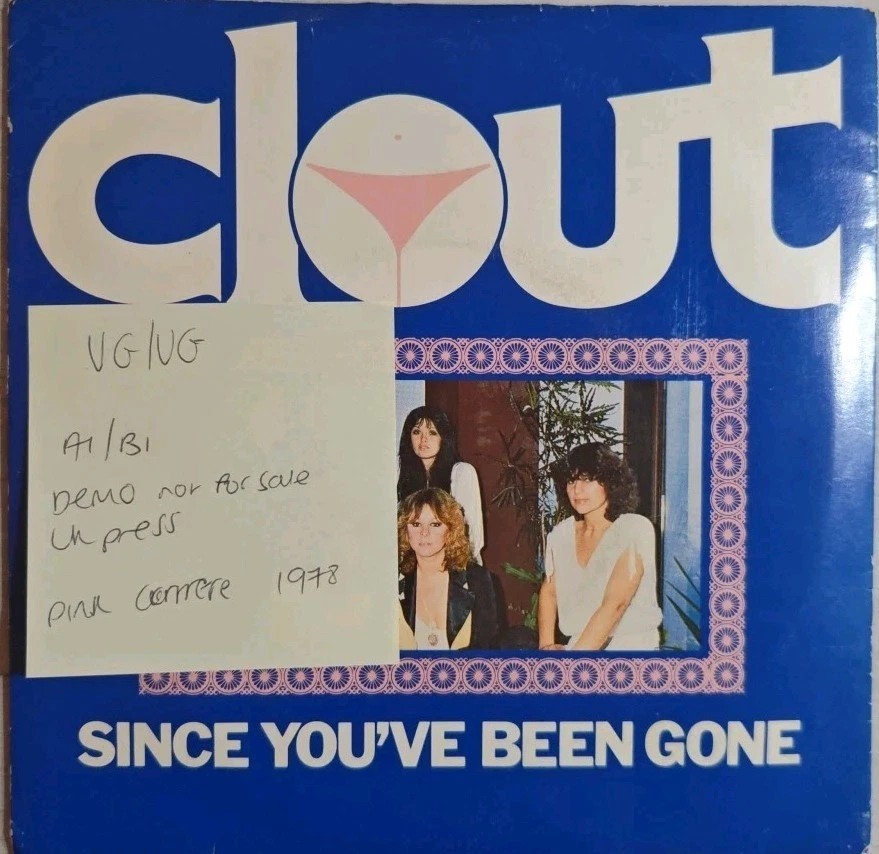
From the late 70s: Clout – Since You've Been Gone 7" (CAR 101, 1978), graded VG/VG, £3. It's a UK press on Carrere, and the listing notes it as a "demo not for sale".
A tip from the trade: an A-label isn't always worth more than the stock copy. Esprit (eil.com) points out that when reviewers shrugged at a 60s single, very few stock copies reached the shops, so some are more common as demos than as shop copies.
Factory samples and "Not For Sale" stickers
Not every promo got a special label. For a while in the mid-70s, EMI stuck "FACTORY SAMPLE NOT FOR SALE" stickers on ordinary labels instead of printing demo labels. It had used similar stickers in the late 50s and early 60s too. So a normal-looking label with a sticker or stamp can still be a genuine promo.
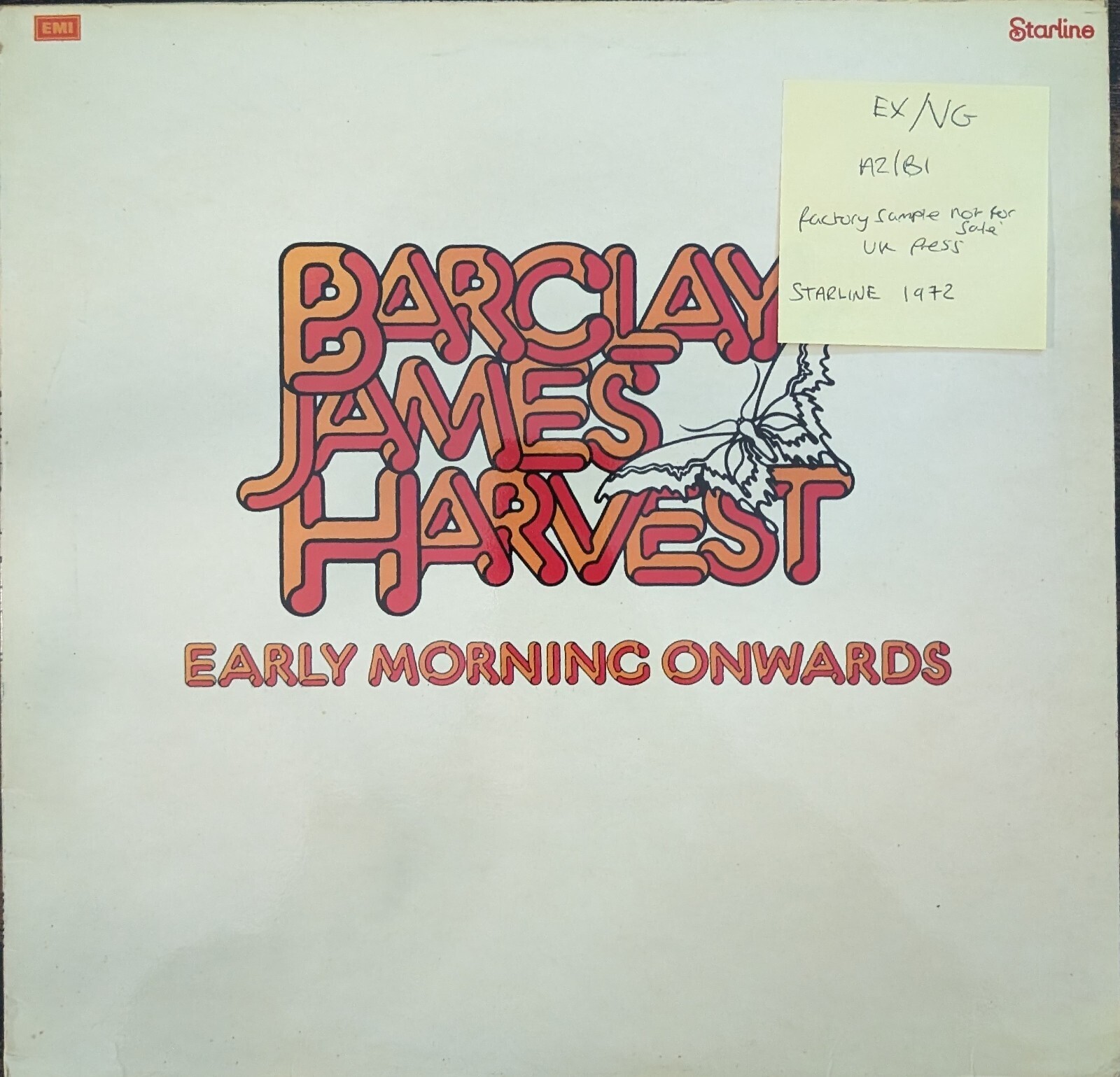
On EMI's budget Starline label: Barclay James Harvest – Early Morning Onwards LP (SRS 5126, 1972), graded EX/VG, £5. The listing notes it as a factory sample, not for sale, UK press, and the sleeve carries both the EMI and Starline logos. EX vinyl for a fiver: a factory sample doesn't have to cost the earth.
Soul and disco this time: Lifestyle – Lifestyle LP (MCF 2809, 1977), graded EX/VG, £5· Sold. It's a UK MCA press, and our listing records "FACTORY SAMPLE NOT FOR SALE". Same tell, different label.
Be careful with stickers, though. A sticker is much easier to add, lose or move than a printed label. Treat it as one clue and check it against the cat no, the label design and the dead wax.
White labels: blank labels, not always rare
A white label is a commercially pressed disc with a blank or bare-bones label. Labels often sent white label promos to radio, DJs and industry staff ahead of release, and in 80s and 90s dance music white labels became a way of road-testing tracks with DJs. Those dance runs could be several hundred or even a few thousand copies. So a white label isn't automatically rare. What it's worth depends on demand for the music and whether that version ever came out properly.
A classic US radio copy: Dennis Linde – Dennis Linde LP (EKS-75062, 1973), graded VG+/VG, £15· Sold. The listing describes it as a butterfly Elektra white label Radio Station copy, US press, with the Elektra inner. A white label with the label's own artwork and a radio-station marking is what US promo LP collectors look for.
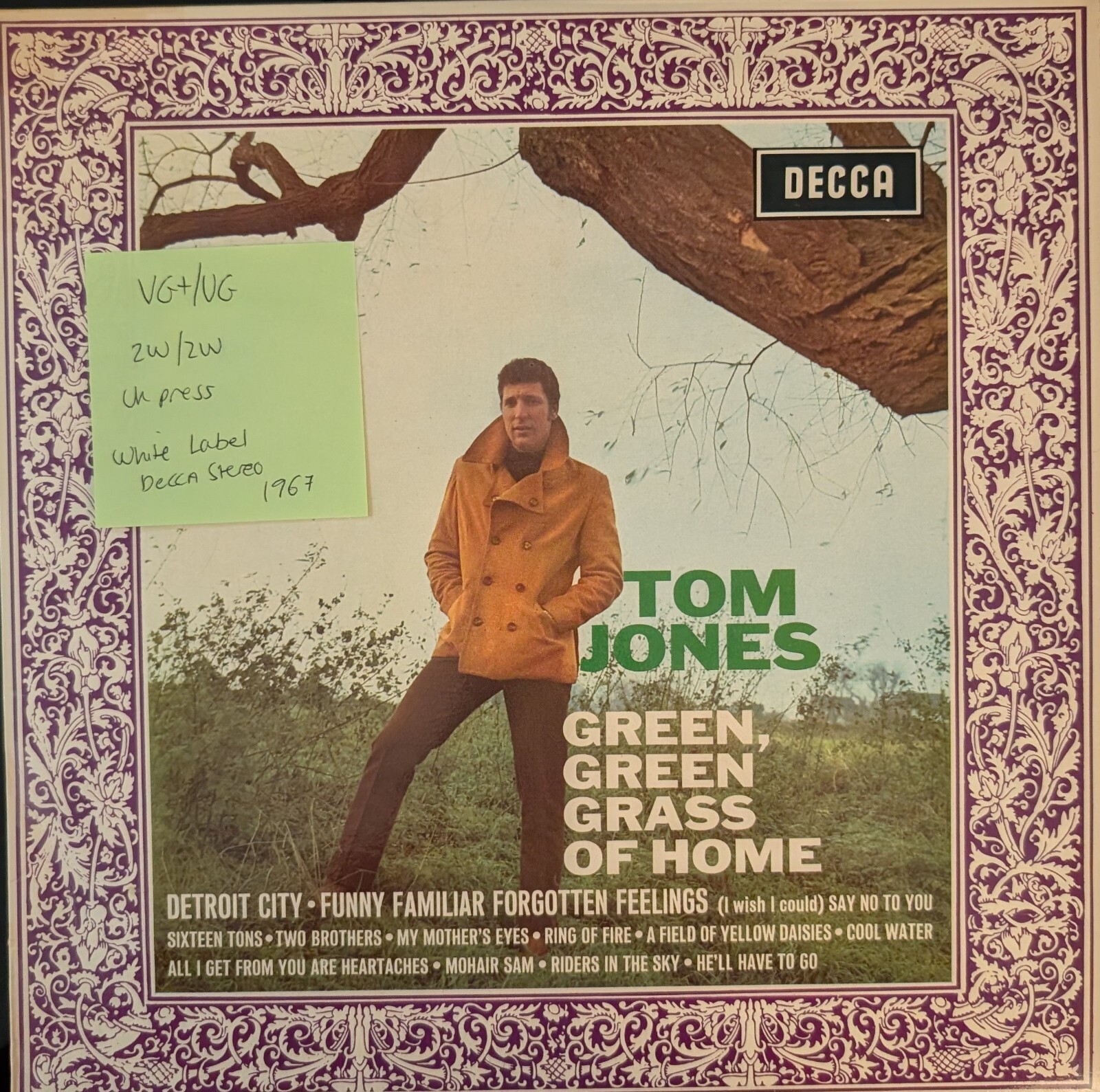
From Decca: Tom Jones – Green, Green Grass Of Home LP (LK4855, 1967), graded VG+/VG, £5. Our notes call it a white label Decca. One honest caveat for buyers: LK 4855 is Decca's mono catalogue number, and the stereo issue is SKL 4855. If you specifically want stereo, ask us for a label photo before you buy. Checking the prefix is exactly the habit this guide is about.
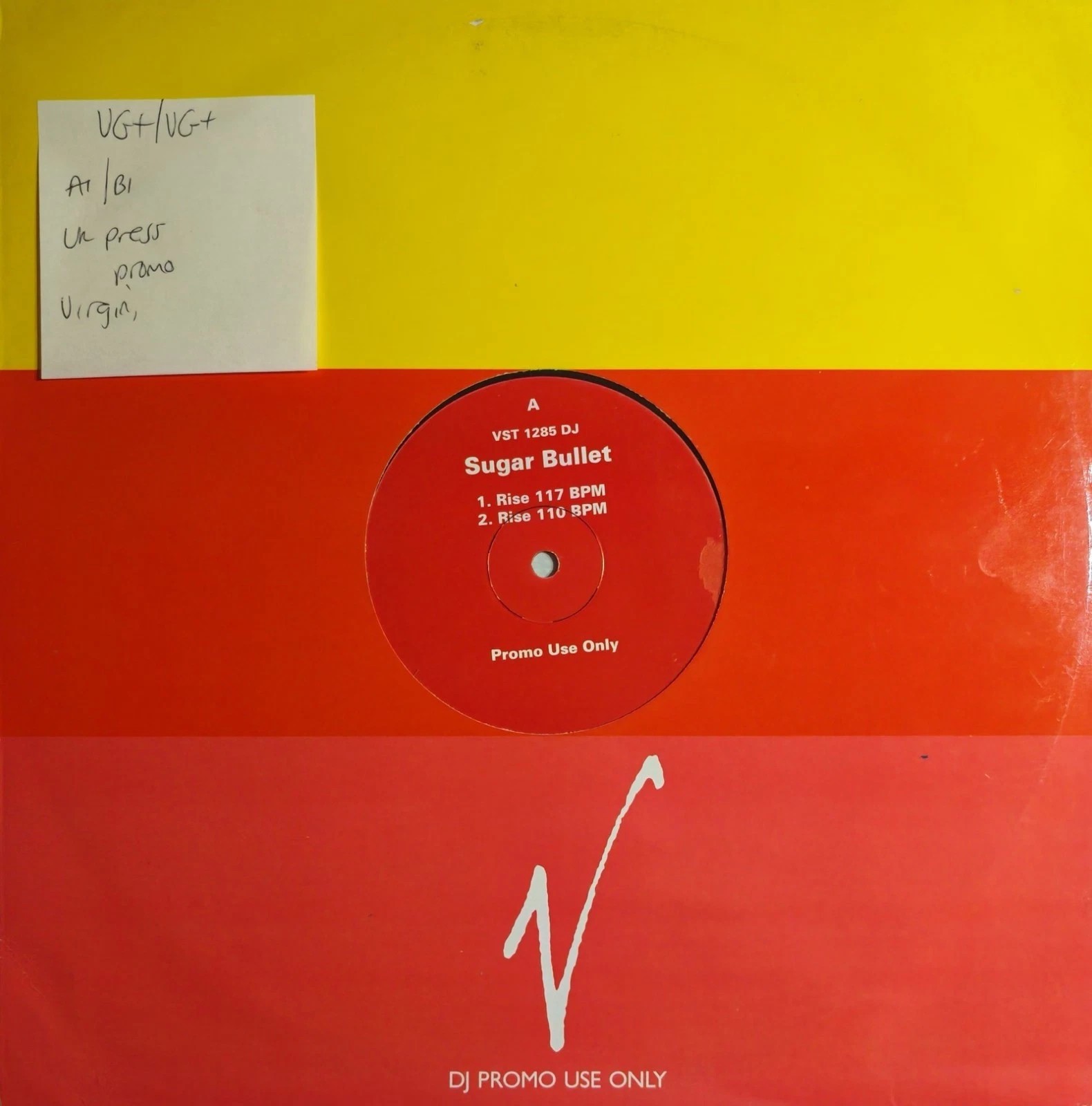
On the DJ side: Sugar – Bullet Rise 12" (VST 1285 DJ, 1991), graded VG+/VG+, £5. It's a Virgin UK DJ promo with "Promo Use Only" on the label and "DJ PROMO USE ONLY" on the sleeve, plus the "DJ" suffix in the cat no. Two versions of "Rise" at 117 and 110 BPM show the kind of DJ-friendly content promos sometimes carried. Collectors want this kind of difference.
Test pressings: the plant's proof copy
A test pressing isn't a promo at all. Once the plates are made, the pressing plant runs a small batch so the label, the mastering engineer and sometimes the artist can check the sound before the full run. They're made to be listened to, not sent to reviewers. Quantities are tiny, often somewhere between five and twenty-five copies. They usually have plain white labels, sometimes stamped or handwritten with the matrix, date or plant.
The priciest record in this guide: Osibisa – Heads LP (MDKS 8007, 1972), graded VG+/VG, £50· Sold. It's listed as a UK MCA test pressing and comes in the full picture sleeve. Test pressings normally left the plant in plain sleeves, so a picture sleeve was probably added by an owner along the way. It's the disc and its label that make it a test pressing. We haven't recorded a matrix on this listing yet, so ask us for runout photos if you want to compare them with a stock copy before buying.
How to spot a genuine test pressing:
- Plain or stamped label, often with handwritten details
- Matrix in the dead wax that matches, or comes just before, the commercial issue
- A crisp new-looking inkjet sticker on a "1970s" test pressing is a warning sign
- Surface wear is common, because they were played on studio decks
Need a refresher on runouts? See our matrix numbers and dead wax guide.
Promo sleeves and Christmas oddities
Sometimes the promo clue is on the sleeve or the packaging rather than the label. A slip, a sticker, a stamped "Not For Sale" or a different jacket can all mark a promo out.
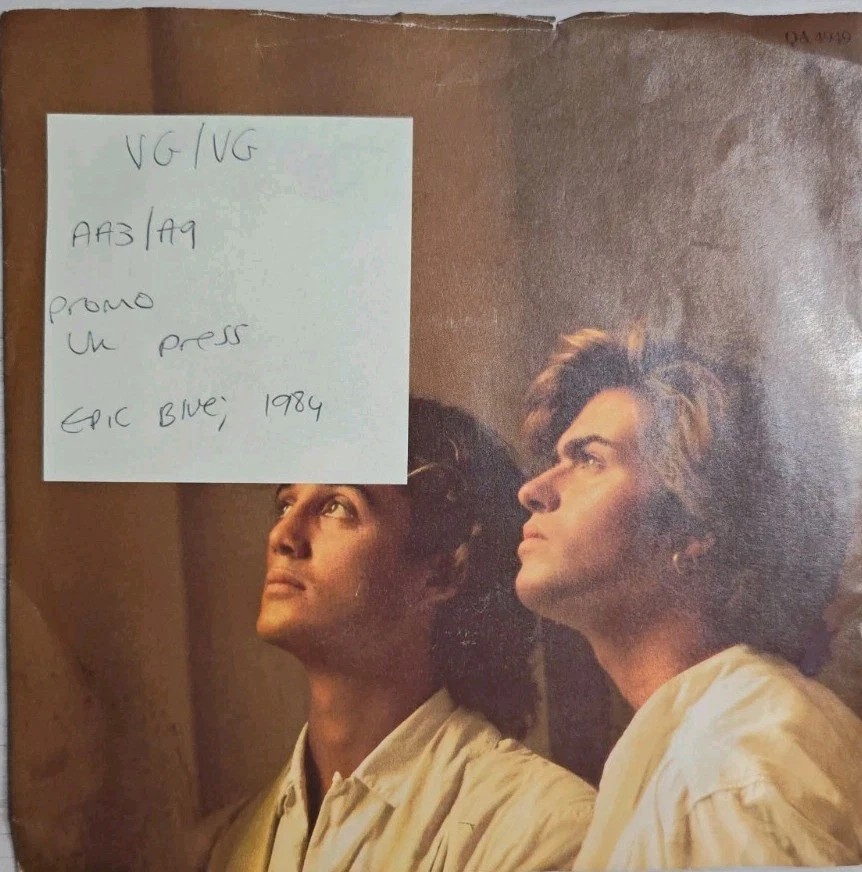
With Christmas coming, here's one for the season: Wham! – Everything She Wants (Remix) / Last Christmas 7" (QA4949, 1984), graded VG/VG, £3. It's a UK Epic press, and the listing notes it as a promo copy. Our photos show the remix of "Everything She Wants" on the sleeve, with "Last Christmas" backing it.
A quick checklist before you pay "promo money"
- Name it properly. Is it an A-label demo, a stickered factory sample, a white label promo, a commercial white label or a test pressing? Ask the seller which.
- Match the cat no. Promos often share the stock catalogue number, sometimes with a suffix like DJ. A mismatch needs explaining.
- Check the design for the era. Use the label-by-label notes above. An EMI green A-label dated 1980 doesn't add up.
- Read the dead wax. Compare it with the stock issue on Discogs. See our first-pressing guide and bootleg and counterfeit guide.
- Ask what's different. An edit, a mix or a mono version adds interest. Identical music with a sticker adds much less.
- Grade it like any other record. Promos were played hard on radio decks. Our grading guide explains what VG and VG+ really mean.
Multi-buys and a proper clean
Buy any three records and 10% comes off the whole crate at checkout, so three £5 LPs come to £13.50. Every record gets a Pro-Ject VC-S3 clean before it's posted (see why choose us), and you can add a Degritter ultrasonic clean for £2. Details are on the cleaning service page.
Got a box of promos in the loft?
Ex-DJs, radio staff and record-shop veterans often have a box of white labels and demos tucked away. We buy single records and whole collections. See how we buy vinyl records, or get in touch with a few photos of the labels and dead wax.
Dig the crates
Browse the full shop, tell us what you're after on our wanted list, and you can reserve online and collect from our Mansfield record shop. Not sure whether your "promo" is the real thing? Send us photos of both labels and the runouts, and we'll tell you what we can see and what we can't swear to without the disc in hand.