Want to know how to spot a bootleg vinyl before you hand over cash? Used and second-hand vinyl is where the fun is — and where the dodgy copies hide. At our Mansfield record shop we dig crates weekly — here's a practical UK buyer's guide: what bootleg and counterfeit actually mean, which label and matrix tells matter, and how Discogs helps without overclaiming. We're showing real, genuine in-stock pressings that carry the legitimate marks fakes often get wrong. None of these are bootlegs; they're the reference copies.
Second-hand vinyl you can trust enough to put on loud. No "rare" stickers invented for SEO — just the checks we use on the shop floor.
What is a bootleg vs a counterfeit vs an unofficial release?
Collectors mix the words up, so keep it plain.
A counterfeit pretends to be an official release. Same (or near-same) artwork, same catalogue story — but it wasn't pressed by the label that owns the rights. Shop owners and the BPI treat these as pirated records. They undercut proper shops and leave artists unpaid.
A bootleg, in collector speak, is usually an unofficial live set, outtakes or other material that was never sanctioned as that release. Still unofficial and still not paying rights holders. Collectors sometimes hunt them for the history; that doesn't make them high-street stock.
Unofficial is the umbrella: anything not authorised by the rights holders. What Hi-Fi? draws the same line — counterfeits fake official titles; bootlegs often preserve unreleased performances. Either way, if a listing is vague about country, year and catalogue number, walk carefully.
We won't make up values for you. Condition, completeness and a quiet play matter more than any "mint rare bootleg" claim in a title. VG is a playable grade when it's graded honestly — see our vinyl grading guide.
Label and catalogue mismatches
Start with the boring paperwork. Spine, rear sleeve and centre labels should agree on the catalogue number. A US label photo is useless for checking a UK press of the same album.
Tells that make us slow down:
- Wrong or missing catalogue prefix for the claimed label and era
- Rim text that belongs to a later rights owner on a supposed early press
- Fonts that look freshly desktop-published on a 1970 sleeve
- Missing publishing, rights or manufacturer lines that every official copy of that edition carries
- Side layout that doesn't match known copies (track order, speed marks, logo placement)
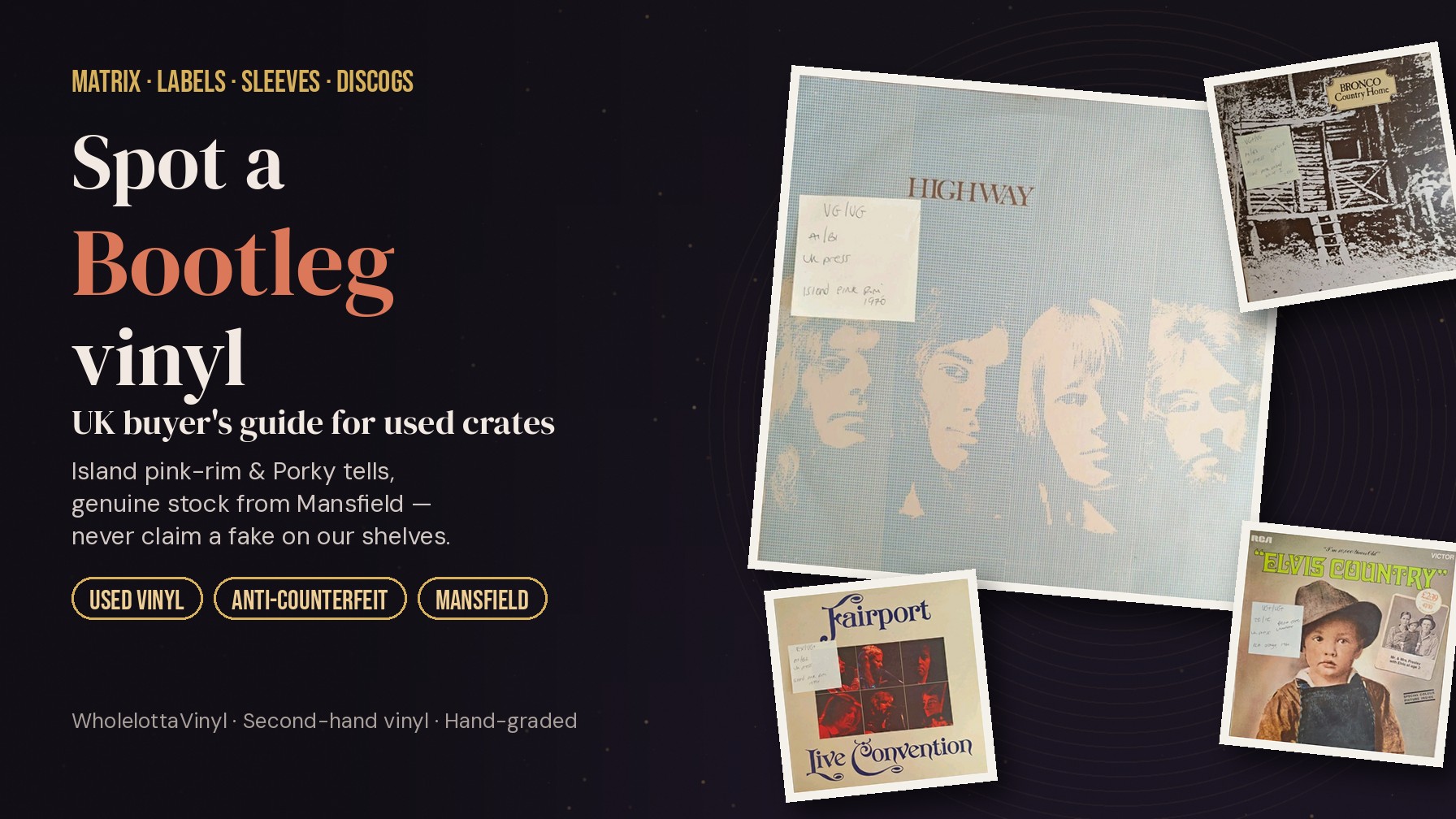
Genuine UK Island LPs from the early 70s often wear the pink-rim or pink-label designs collectors already know. Here's a real pink-rim copy in stock now: Free – Highway LP (ILPS9138, 1970), graded VG/VG, £30. Island pink rim, UK press, matrix noted as A1/B1 on the listing. We're using it as a legitimate label tell, not as a scare story.
Same family of tell, different sleeve: Bronco – Country Home LP (ILPS9124, 1970), graded VG+/VG, £25. Gatefold UK press with the Island pink label / white "i" design noted on the listing. Cat no on the sleeve and labels should line up with ILPS9124 — that's the habit you want before you buy anything "rare" online.
On a 7": Bad Company – Can't Get Enough (WIP 6191, 1974), graded VG+/VG, £3. Island pink rim again, matrix 1U/1U. Cheap enough to practise the habit: match WIP 6191 on the label to the dead wax before you care about anything else.
Matrix and runout tells
The runout (dead wax) is the strongest single clue for most collectors — and still not a verdict on its own. Hold the disc by the edges, tip it under angled light, and read both sides. Stamped and hand-etched sections often sit side by side.
What Discogs regulars and shop owners repeat:
- Compare the full runout string to the exact Discogs release you're claiming, both sides
- Matrix / runout text should make sense next to the catalogue number on the label
- Missing matrix on a supposedly commercial press is a serious warning
- Wrong plant style (hand-etched where that plant stamped, or the reverse) is suspicious
- Famous engineer marks get forged; match size, placement and handwriting character as well as the letters
George Peckham's Porky / Pecko etchings are a classic UK mastering tell on many 70s pressings. In stock: Refugee – Refugee LP (CAS1087, 1974), graded VG+/VG, £10. Big Hatter Charisma UK press; the listing notes the Porky/Pecko cut (our notes had a "pokey" typo — the etch is Porky/Pecko). Matrix A1/B1. Again: a genuine cut mark, not a fake.
Another Porky in the crates: Fiddler's Dram – Fiddler's Dram LP (DID711, 1980), graded VG+/VG, £5. Listing notes "A Porky Prime Cut" on a Dingle's UK press. Five quid is a calm place to practise reading dead wax before you spend three figures on something with a story.
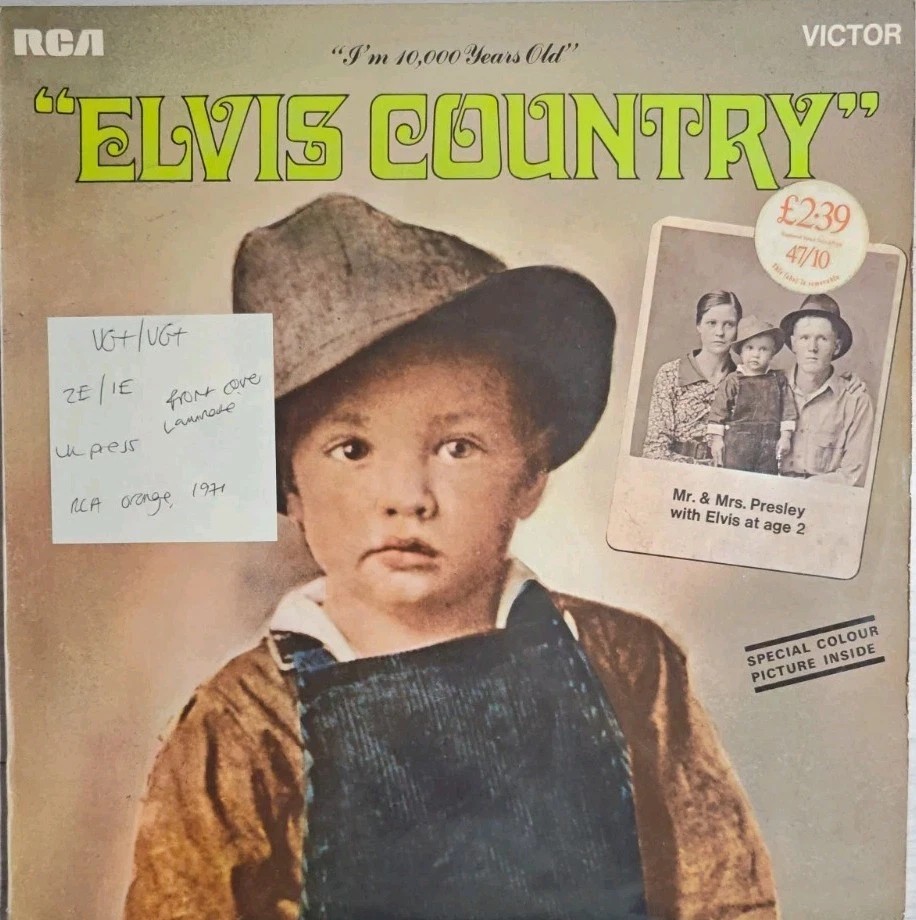
EMI-plant style stampers show up as letter/number side marks on many UK majors. Example: Elvis Presley – Elvis Country LP (SF8172, 1971), graded VG+/VG+, £20. UK RCA Victor press with laminated front; matrix noted 2E/1E. Match SF8172 on the labels to those side marks, then check Discogs for that UK edition — don't invent a "first press" from the cover alone.
We've already written the deep dive on reading runouts: matrix numbers and dead wax explained. Use that when a seller sends a blurry phone photo of side A only.
Sleeve and weight tells
Packaging is the second filter. What Hi-Fi? quotes UK shop owners on the practical stuff:
- 60s/70s oil-based inks often look deeper than later copies claiming to be "original"
- Fake ring wear can look printed — real ring wear has texture under a fingertip
- If the real edition was a gatefold and yours isn't, you're not holding that edition
- Barcodes on later fakes often show jagged / pixelated bars
- Jackets that feel oddly light or flimsy versus known copies of that era are worth a second look
- Weight of the disc is supporting evidence only: a claimed 180g that feels like a wafer is suspicious; a normal-weight 70s UK press isn't "fake" because it isn't 180g
Construction matters as much as print. In stock: Colosseum – Those Who Are About To Die Salute You LP (STL 5510, 1969), graded VG/VG, £20. UK press with a six-fold laminated cover noted on the listing, matrix 1Y/1Y. A counterfeit of a complex sleeve often cheats on board weight, laminate and fold count. Compare the physical object to photos of known STL 5510 copies before you celebrate.
Another pink-rim reference with a tidy grade: Fairport Convention – Fairport Live Convention LP (ILPS9285, 1974), graded EX/VG+, £7.50. Island pink rim, matrix A1/B2. EX vinyl at that price is the sort of copy we'd rather sell honestly than dress up as a "lost first pressing".
If you're chasing first-press vs later UK runs, use our first-pressing guide and the original vs reissue vs repress vs remaster explainer. Reissues aren't counterfeits. Confusing those words is how people pay mint-money for ordinary represses — or accuse honest shops of selling fakes.
How Discogs helps (without overclaiming)
Discogs is the catalogue most of us use. It is not a certificate of authenticity, and a single matching digit is not proof.
A sane workflow:
- Write down what the seller claims (artist, title, country, year, label, catalogue)
- Read both labels and both runouts under angled light; photograph them
- Search Discogs for the distinctive runout section, then open candidate releases
- Compare sleeve, labels and both runouts to the same release page — not a random US issue of the same album
- Read the release notes and variant lists; minor runout differences can be legitimate variants
- If several things disagree (cat no, label design, plant marks, sleeve construction), walk away or ask better questions
Never combine lines from two Discogs releases to invent a match that nobody documented. An unlisted combination needs more checking; it doesn't prove anything by itself.
Online red flags that line up with BPI / shop advice: stock photos instead of the actual copy, sellers who can't answer provenance questions, and prices that undercut every reputable listing of the same edition. Record fairs and independent shops are generally safer than anonymous marketplace listings.
Worked examples from the Mansfield crates
Quick recap of the genuine tells above, all InStock as we write:
| Tell | Example in stock |
|---|---|
| Island pink rim / pink label | Free Highway; Bronco Country Home; Bad Company 7"; Fairport Live Convention |
| Porky / Pecko mastering mark | Refugee; Fiddler's Dram |
| EMI-style side stamper letters | Elvis Country (2E/1E) |
| Complex laminated sleeve construction | Colosseum STL 5510 six-fold |
None of these are being sold as bootlegs. They're the opposite: clear catalogue numbers, listed matrix notes, photos of the actual copy, and honest VG–EX grades. If a "mint sealed original" online can't show you the same level of detail, that is your answer.
Multi-buys, Autumn10 and a proper clean
Buy any three records and 10% comes off the whole crate at checkout, so three £5 LPs come to £13.50. New customers can use Autumn10 for 10% off instead (one code per order). Every record gets a Pro-Ject VC-S3 clean before it's posted (see why choose us), and you can add a Degritter ultrasonic clean for £2; details are on the cleaning service page.
Clearing the loft? We'll take it off your hands
Got a box of Island pink-rims, Charisma hatters or other 70s rock gathering dust? We buy single records and whole collections. See how we buy vinyl records, or get in touch with a few photos. Ladder not included.
Dig the crates
Browse the full shop, tell us what you're hunting for on our wanted list, and keep the matrix / dead-wax guide open while you compare runouts. You can reserve online and collect from our Mansfield record shop.
Unsure after the checks above? Message us with photos before you buy elsewhere — we'll say what we can see, and what we can't swear to without the disc in hand.