If you're new to records, the sizes and speeds can be confusing. A "single" might be a 7-inch or a 12-inch. An "EP" can look exactly like a single. A 10-inch might play at 78, 45 or 33. And a lot of first-time buyers put a record on at the wrong speed and wonder why Freddie Mercury sounds like he's been at the helium.
This guide goes through the vinyl record sizes and speeds you'll find in a second-hand shop like ours, what each one was for, and how to tell which speed to use. Every example is a real record in our racks today. Most of what we sell is £2 7-inch singles and £5 LPs, so it's a cheap way to try a few formats and find out which you like.
The quick answer
- 7-inch single: usually 45rpm, one song a side, sometimes two.
- 7-inch EP: same size, usually four tracks, two a side. Often 45rpm, but some play at 33, so check the label.
- 10-inch: the old size for 78s and early LPs, later used for special-edition singles. Could be 78, 45 or 33.
- 12-inch single: LP-sized, but usually with one or two longer mixes. Often 45rpm, sometimes 33.
- LP (long player): 12-inch, 33⅓rpm, a full album over two sides.
- Double and triple LPs: two or three 12-inch records in one sleeve or box, all at 33⅓.
If you're not sure, read the label. Most records say 33, 33⅓ or 45 somewhere on the label or the sleeve.
7-inch singles: 45rpm, the pop record
The 7-inch single at 45rpm was the format for pop music from the 1950s onwards: a hit on the A-side and another song on the B-side. A lot of the fun is in the B-sides, which often never made it onto an album.
Some 7-inch singles have a large centre hole (or a push-out centre). If yours has the big hole, you'll need a small 45 adapter to play it on most home turntables.
From our racks:
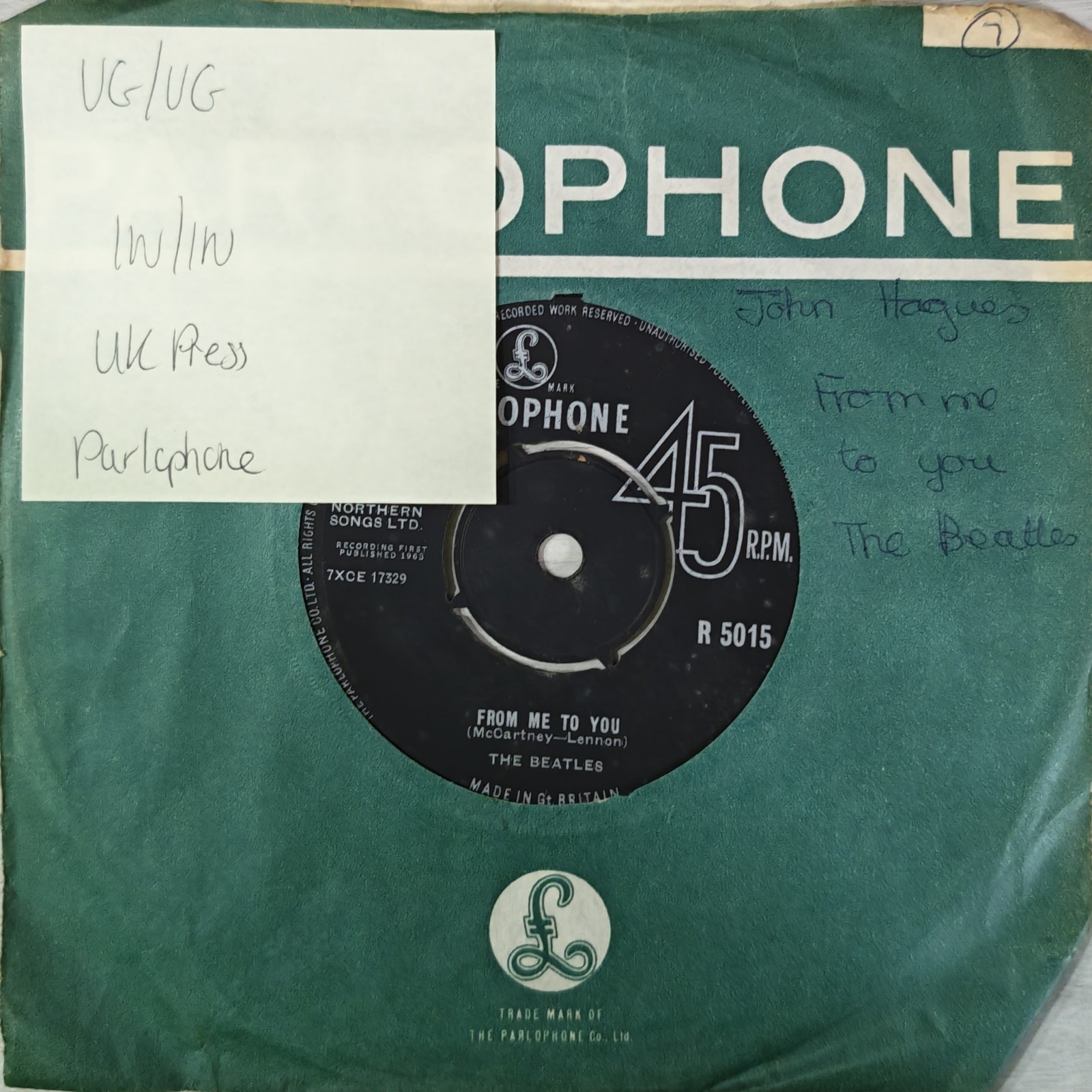
- The Beatles – From Me To You, 7" single, Parlophone R5015, VG/VG, with "Thank You Girl" on the B-side. £2
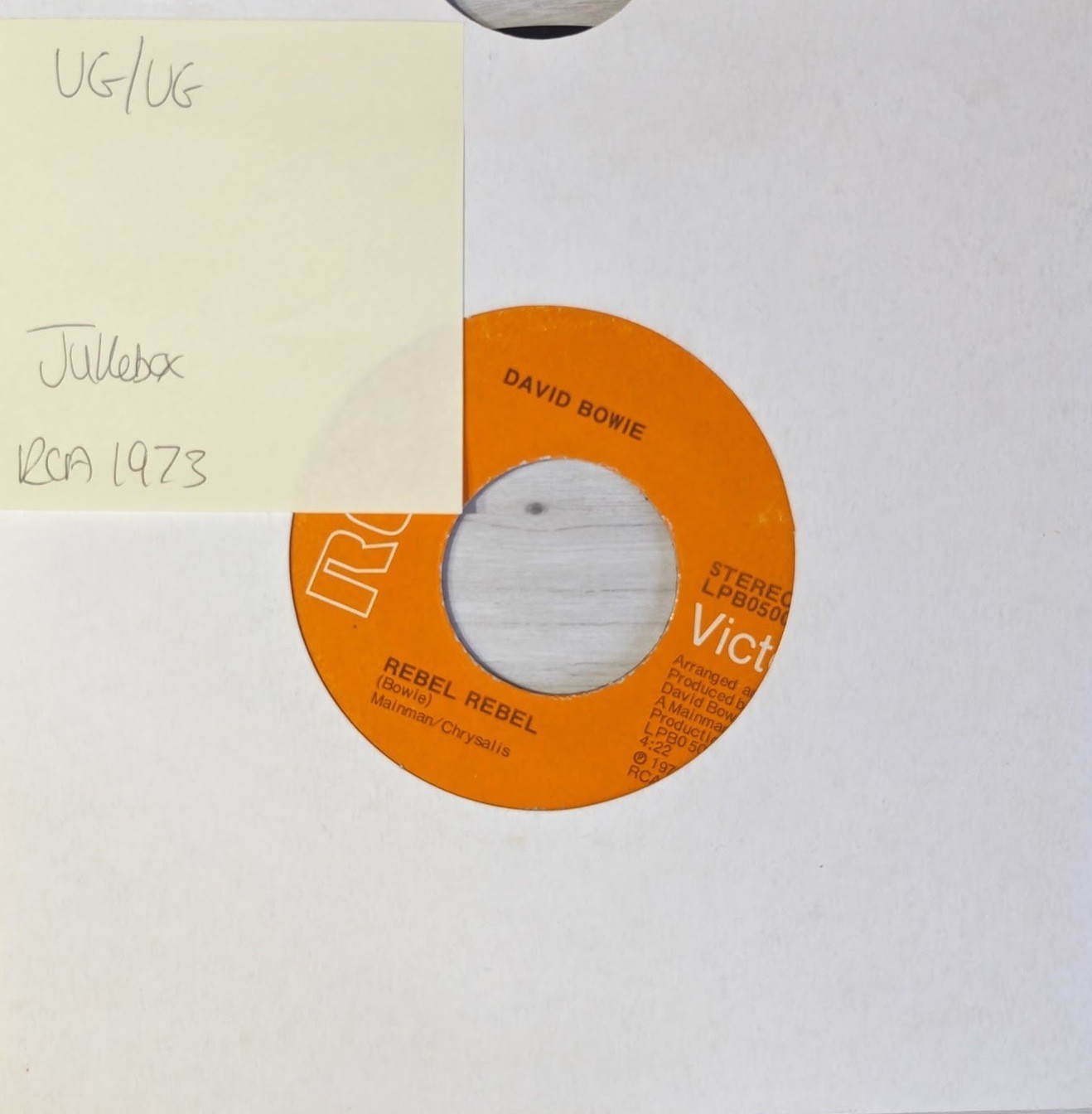
- David Bowie – Rebel Rebel, 7" single, RCA LPBO 5009, VG/VG, backed with "Queen Bitch". £2
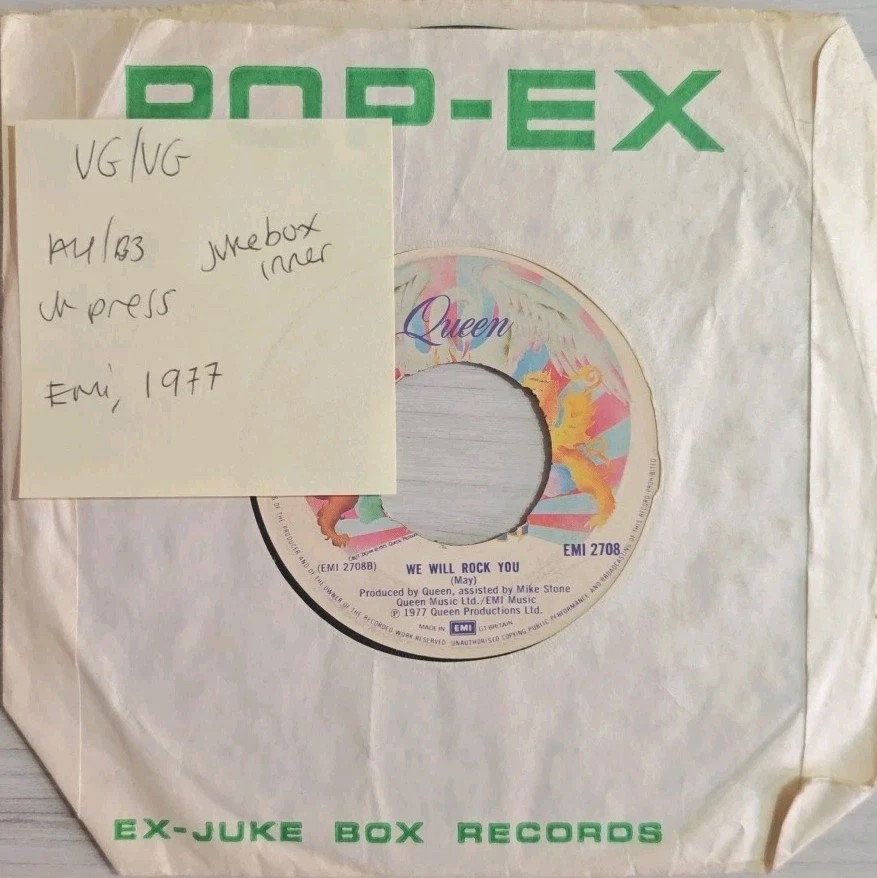
- Queen – We Are The Champions / We Will Rock You, 7" single, UK EMI 2708, 1977, VG/VG. Two of the band's best-known songs on one single. £2
We have nearly 3,800 7-inch singles in stock. £2 singles are £1.50 each when you buy ten or more (that's ten for £15), and it's worked out automatically in your basket. Browse the 7-inch singles.
7-inch EPs: four tracks on a small record
EP stands for "extended play". In the UK in the 1950s and 1960s, an EP was usually a 7-inch with four songs, sold in a card picture sleeve. Record companies used them to put out songs from an album, or a handful of hits, for less than the price of an LP. The format came back in the 1980s, when bands used EPs for songs that didn't fit on a normal single.
The tricky bit is the speed. Many EPs play at 45, but some play at 33, so this is the format where it's most worth checking the label.
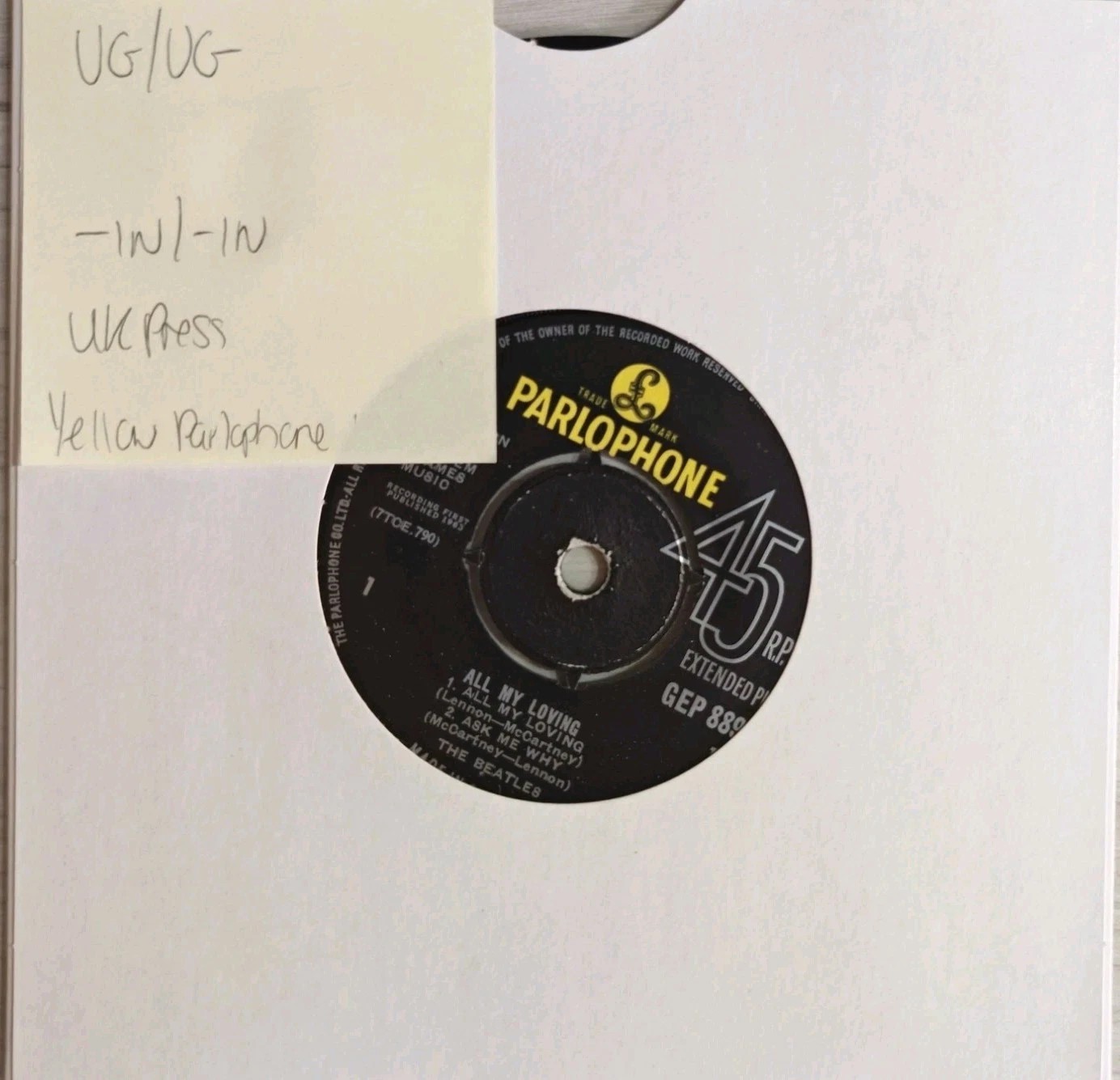
- The Beatles – All My Loving EP, 7" EP, Parlophone GEP 8891, 1964, VG/VG. Four tracks: "All My Loving", "Ask Me Why", "Money" and "P.S. I Love You". £2
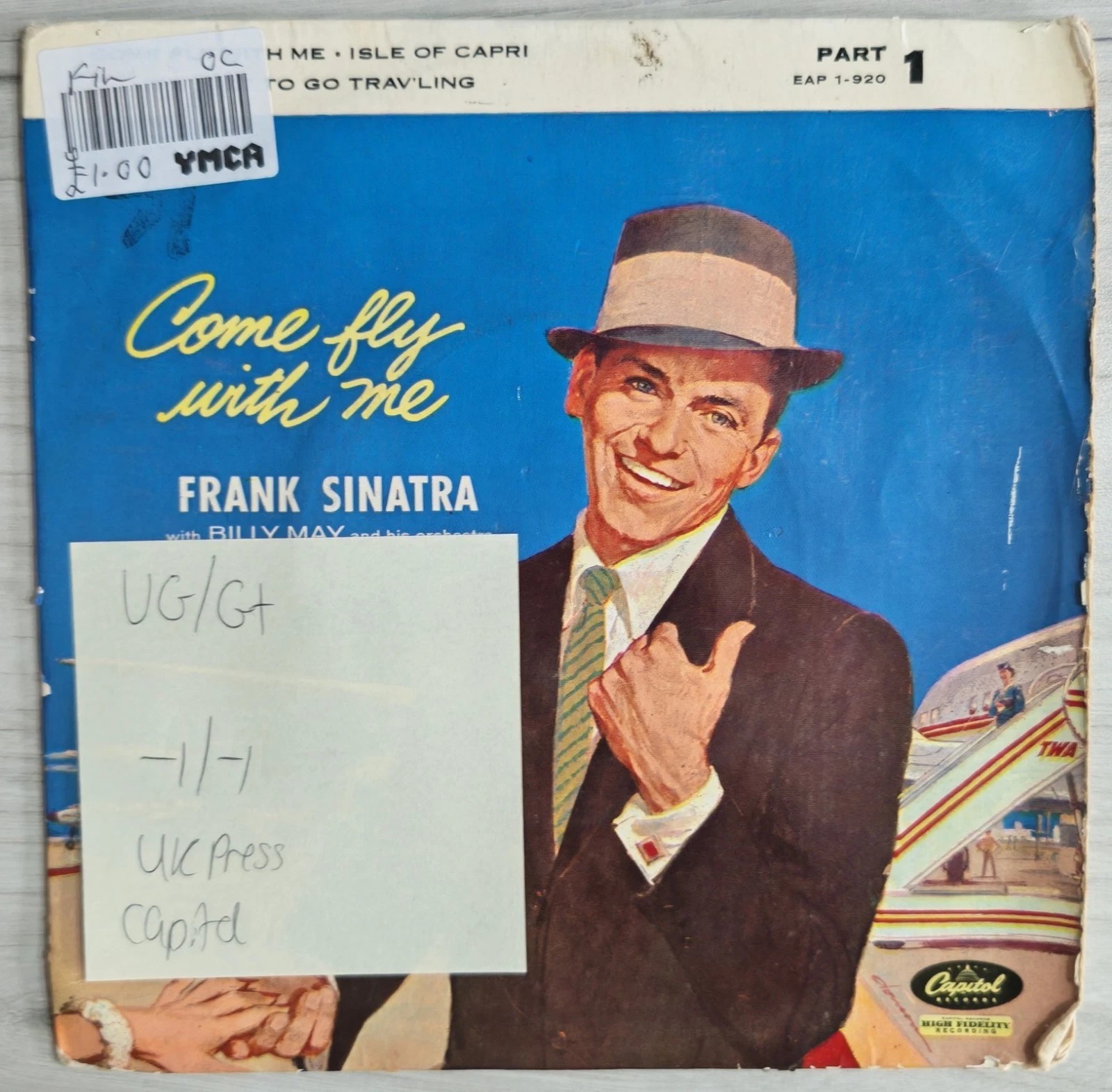
- Frank Sinatra – Come Fly With Me (Part 1) EP, 7" EP, Capitol EAP 1-920, 1959, VG/VG+. Songs from the album, split across a set of EPs. £2
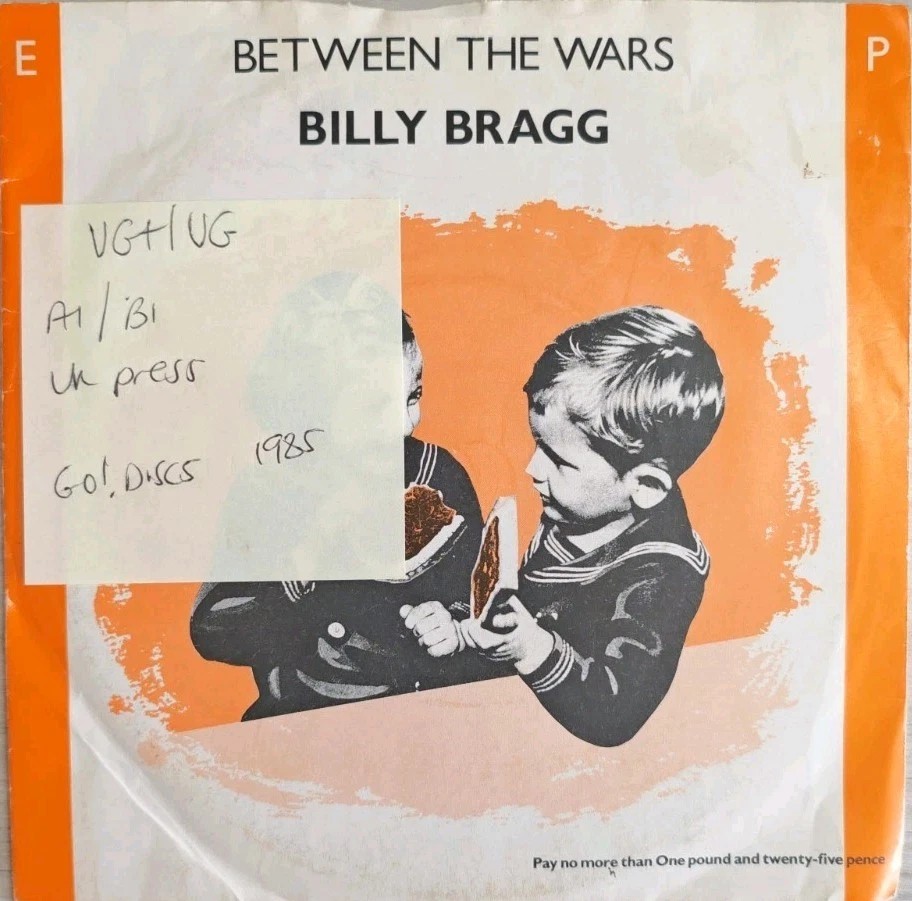
- Billy Bragg – Between The Wars EP, 7" EP, AGOEP1, 1985, VG+/VG. A 1980s four-tracker. £2
10-inch records: 78s, early LPs and special editions
Before the 1950s, most records were 10-inch 78s made of shellac, which is heavier and more brittle than vinyl. You need a turntable that plays 78 and, ideally, a 78 stylus to play them. We don't list many 78s.
In the 1950s, record companies also made 10-inch LPs at 33⅓ before the 12-inch LP took over. Later, in the 1980s and 1990s, the 10-inch came back as a limited-edition format for singles and mini-albums. So a 10-inch could be any of the three speeds, and the label is the only way to be sure.
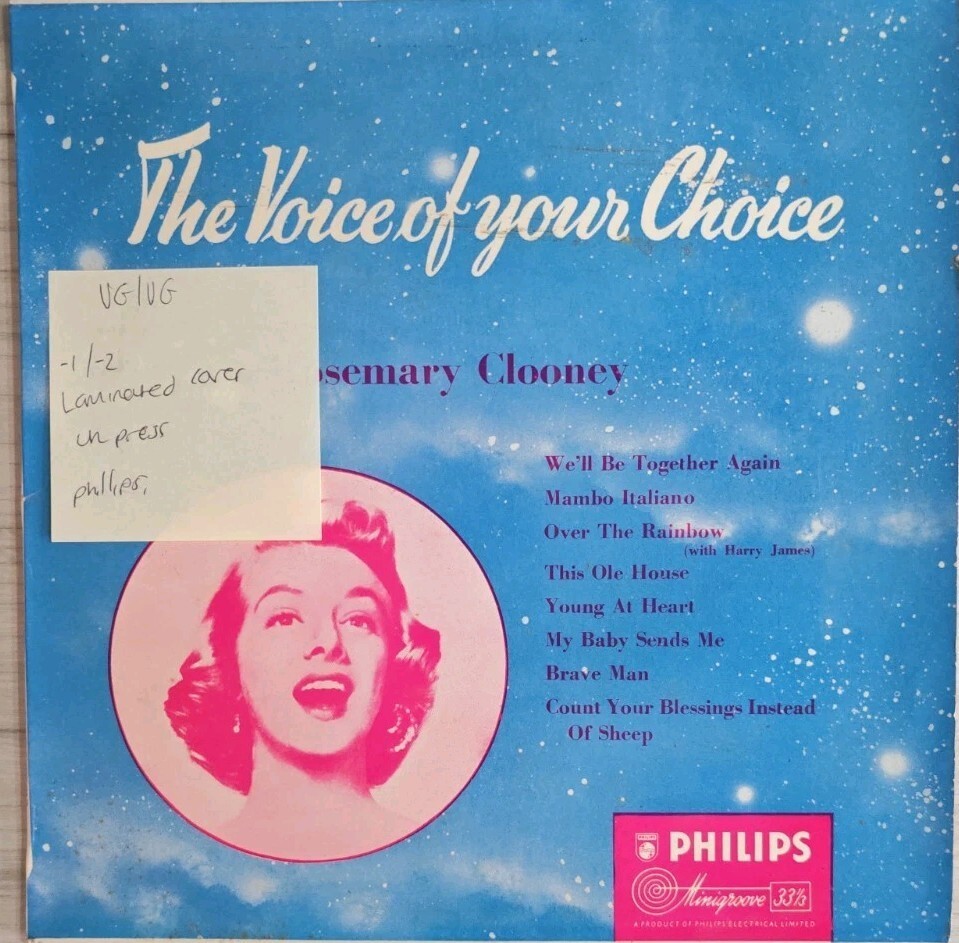
- Rosemary Clooney – The Voice Of Your Choice, 10" LP, Philips BBR 8047, VG/VG, with laminated sleeve. Eight songs, including "This Ole House" and "Mambo Italiano". £5
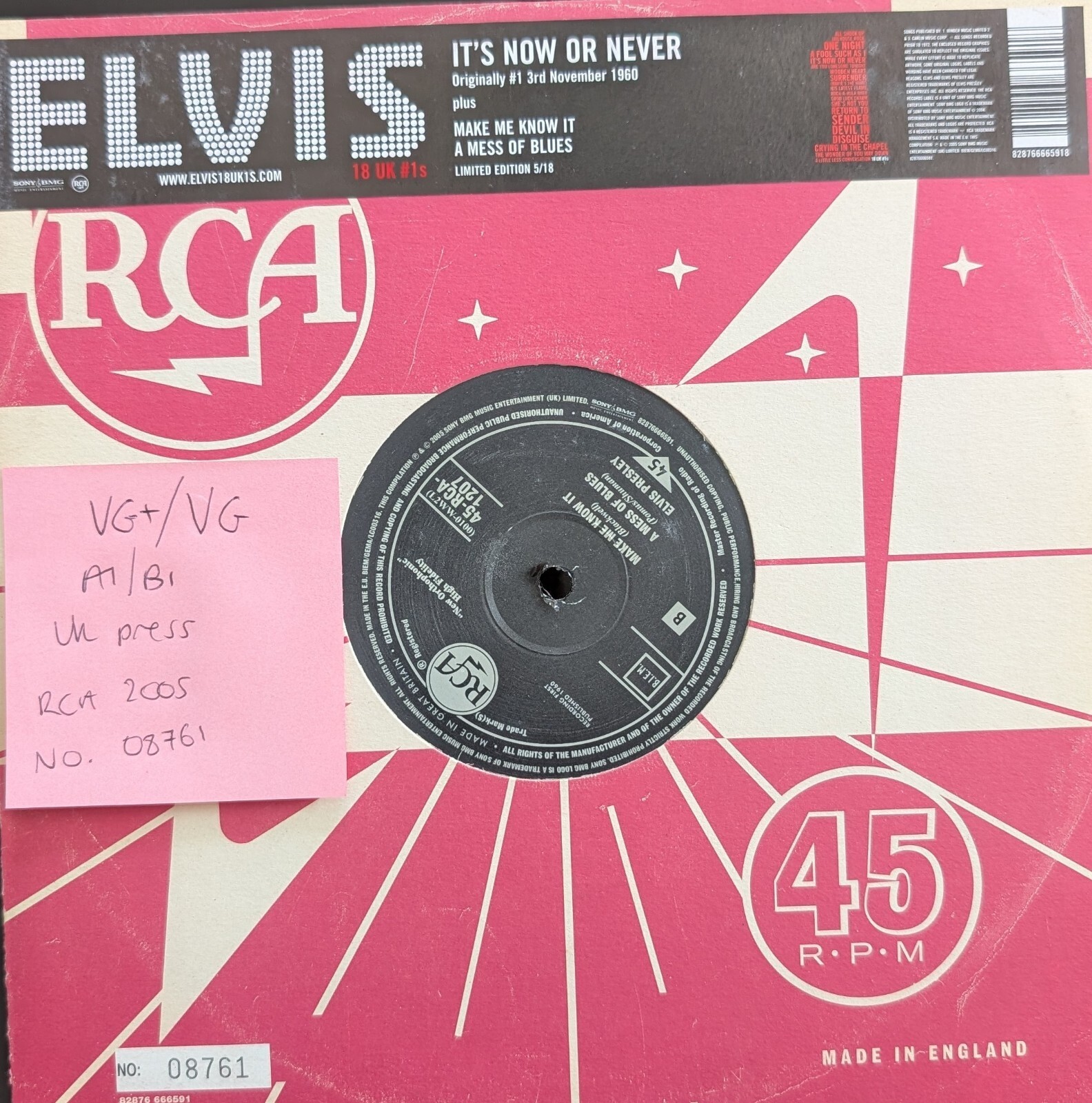
- Elvis Presley – It's Now Or Never, 10", RCA, 2005, VG+/VG. Number 5 of 18 in a 2005 UK series of Elvis 10-inch records, and the sleeve says 45. £5
- Status Quo – Fresh Quota· Sold, 10", PRT DOW2, 1981, EX/G+. The record is EX, but the cover shows noticeable wear. £5
12-inch singles: longer mixes and more volume
The 12-inch single took off in the late 1970s with disco. Putting one or two songs on a record the size of an LP gives the groove more room, so it can be cut louder, often at 45rpm. That made them popular with DJs. By the 1980s most big singles came out as a 7-inch and a 12-inch, with the 12-inch usually having an extended mix.
If a 12-inch sounds slow and muddy at 33, try 45.
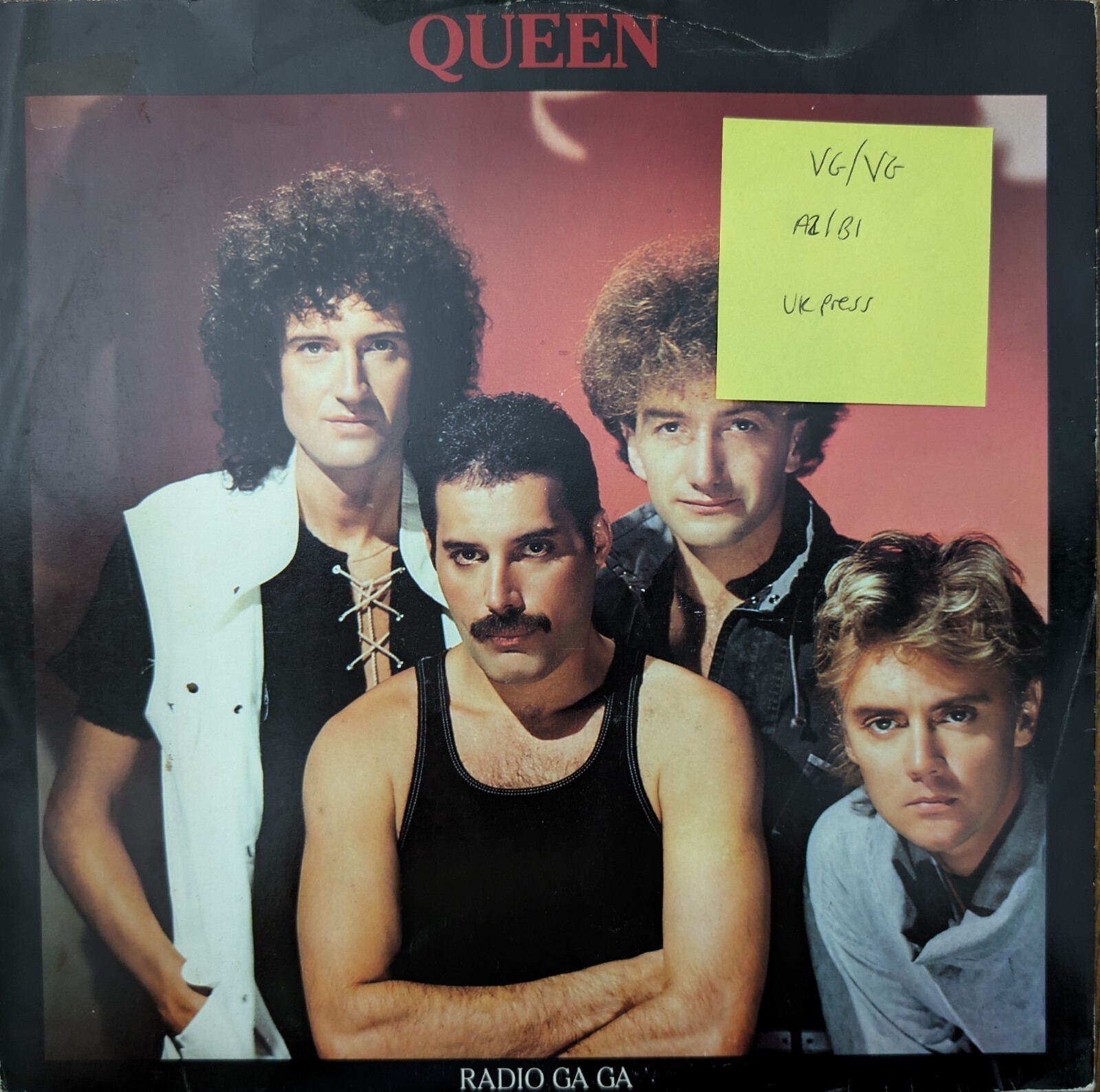
- Queen – Radio Ga Ga, 12" single, EMI 12QUEEN1, 1984, VG/VG. The extended version and an instrumental, with "I Go Crazy" on the B-side. £10
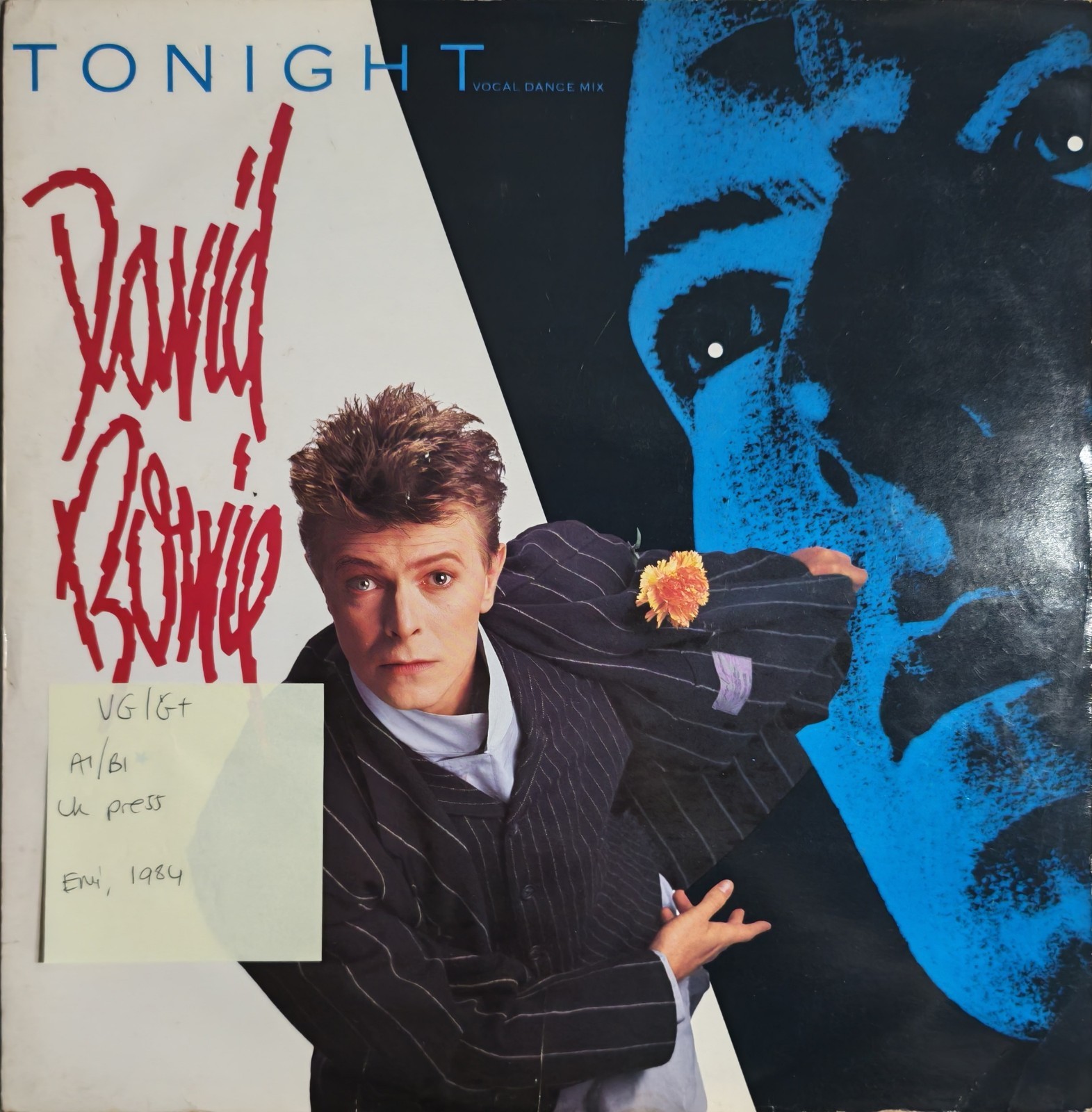
- David Bowie – Tumble And Twirl, 12" single, EMI America 12EA 187, 1984, VG/G+. £10
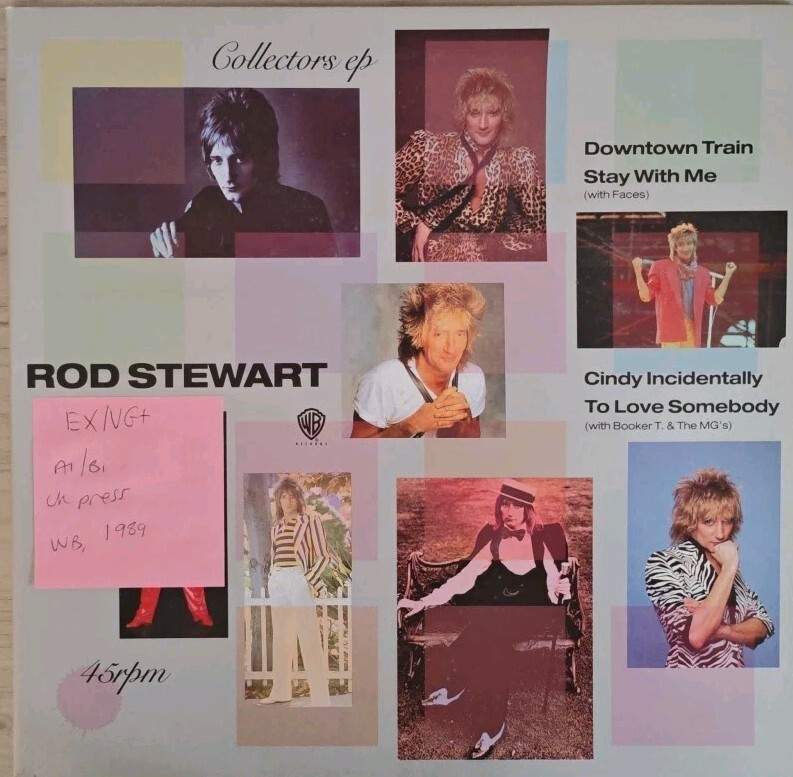
- Rod Stewart – Downtown Train Collectors EP, 12", Warner Bros. W2647, 1989, EX/VG+. A 12-inch EP with four tracks, including "Stay With Me". £5
LPs: the album at 33⅓
The 12-inch long player at 33⅓rpm has been the standard album format since the early 1950s. Each side holds roughly 15 to 25 minutes of music, which is why albums were written and sequenced in two halves. When you buy an LP second-hand, look out for the inner sleeve too. A printed inner with lyrics or credits is part of the record, and we mention it in the listing when it's there.
- Jethro Tull – Heavy Horses, LP, Chrysalis CHR 1175, VG+/G+, with the printed inner sleeve. £12
- Dire Straits – Making Movies, LP, Vertigo 6359 034, 1980, VG/G+. £12
We have about 3,500 LPs in stock, and most are £5. Browse the LPs.
Double and triple LPs
When an album, a live set or a compilation is too long for one record, it's spread over two or three. They often come in a gatefold sleeve that opens like a book. Check the grade covers every disc, and the photos for the sleeve spine, because gatefolds take more wear.
- Elton John – Blue Moves, 2LP, Rocket ROSP 1, 1976, VG+/VG, with the printed inner sleeve. £5
- The Moody Blues – This Is The Moody Blues, 2LP, Threshold MB 1/2, 1974, VG+/VG. A 26-track compilation. £5
- Various – Rock Rules OK, 3LP, K-tel RL 001, 1977, EX/VG+. Sixty rock and roll tracks across three records, starting with "Long Tall Sally". £5
- Judy Garland – Star Eyes, 3LP box set, 1984, VG+/VG+. Thirty tracks, opening with "Moon River". £5
Three things to check before you play anything
- The speed. It's printed on most labels. If voices sound too high, you're playing too fast. If they sound slow and heavy, you're playing too slow.
- The centre hole. A big hole needs a 45 adapter. A record that won't sit flat on the spindle shouldn't be forced.
- The grade. We list vinyl and sleeve grades separately. A VG record will have some surface noise. VG+ should play cleanly with only light marks. Every record we sell is cleaned on our Pro-Ject VC-S3 first, and you can read how we clean records on the blog. If you want to know where a record was pressed, see our guide to UK, US and Japanese pressings.
Not sure what to pick?
If you want to try a few formats without choosing every record, our mystery bundles are split by size: ten 7-inch singles for £10, five 12-inch singles for £20, or four albums for £30. You tell us the genres they like and the ones to skip.
Postage by format
The format makes a small difference to postage. InPost Store to Door is £2.70 for the first record whatever the size. Royal Mail Tracked 24 is £3.80 if your basket is up to three 7-inch singles, and £4.70 for anything else. Each extra record in the parcel is 50p, and UK postage is free on orders of £40 or more. Right now, any three records get 10% off automatically in the basket. UK orders placed before 2pm Monday to Friday usually go out the next working day, and you have 60 days to return a record with a free prepaid UK return label. Full details are on our shipping page.
Prices, grades and stock counts are from our shop on 27 November 2026. Each record listed is a single second-hand copy.