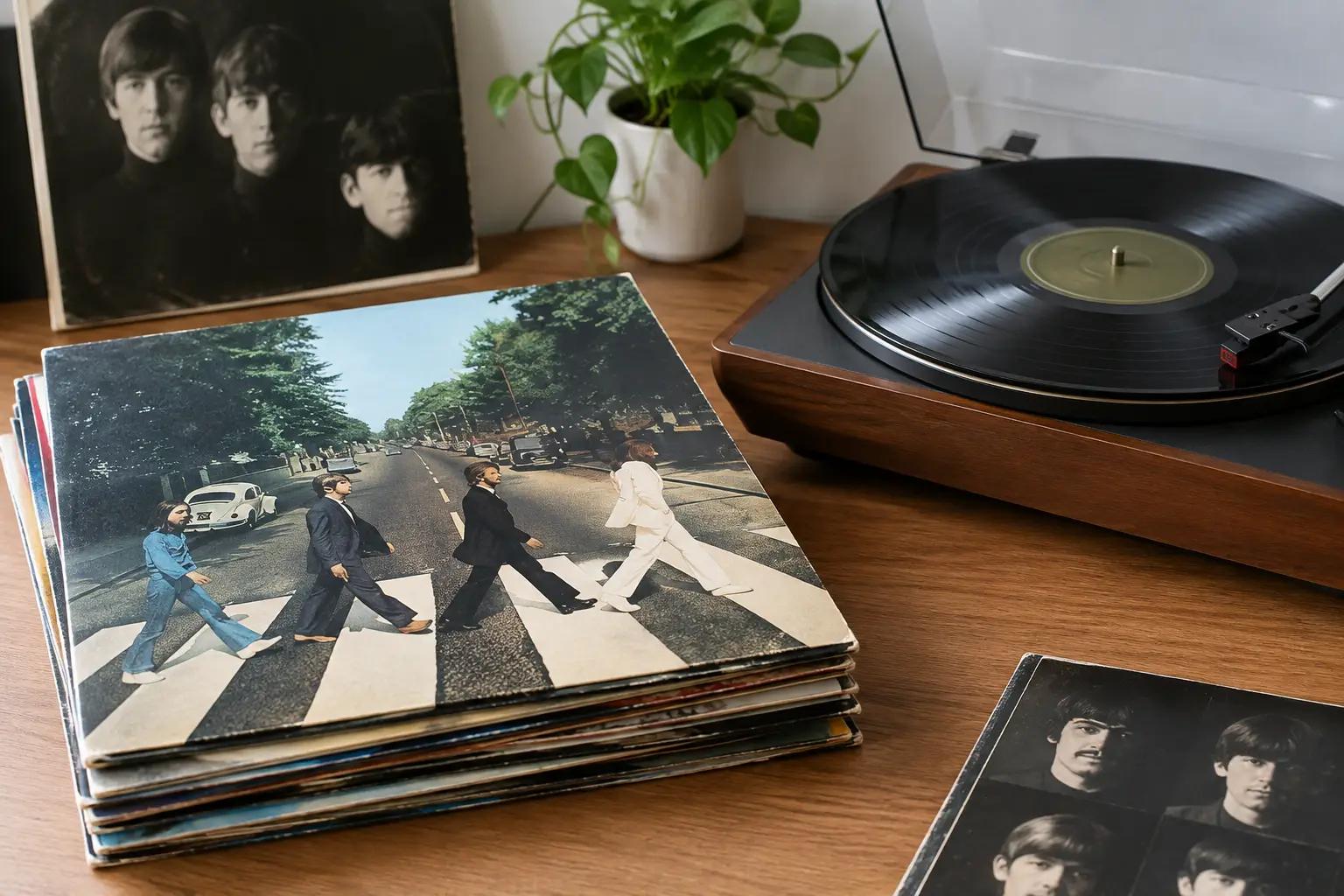
A Beatles LP can look ordinary at first glance, yet the details on its label, sleeve and run-out groove can put it in a very different collecting bracket. This Beatles vinyl value guide is built for UK collectors who want to separate a desirable early pressing from a later issue, and a genuinely clean copy from one that merely photographs well.
The headline is simple: rarity matters, but condition and exact identification often matter just as much. A scarce pressing with groove wear, writing on the cover and a tired-sounding playback may be worth less than a more available copy that is clean, complete and properly graded. For record addicts building a collection, that is useful news. The best buy is not always the copy with the oldest date.
Beatles Vinyl Value Guide: Start With the Exact Pressing
Do not value a Beatles record from the album title alone. Abbey Road, Revolver and Sgt. Pepper's Lonely Hearts Club Band exist in numerous UK and overseas variations, many sharing near-identical cover art. The catalogue number, label design, matrix information and sleeve construction tell the real story.
For UK albums, Parlophone is usually the starting point. The earliest labels and label text can make a substantial difference. The black-and-gold Parlophone label on Please Please Me, for example, is a landmark first issue and commands serious collector attention when genuine and in strong condition. The familiar black-and-yellow Parlophone labels cover many sought-after early pressings, but they are not all equal. Small wording changes, publishing credits and matrix suffixes can distinguish an earlier cut from a later one.
Turn the record over and inspect the deadwax, also called the run-out. The stamped matrix numbers identify the lacquer cut used to make that disc. On Beatles LPs, a low matrix such as -1 is often desirable, although it is not an automatic premium in every case. A first cut can be valuable because of its period-correct status or a sound collectors favour, but the sleeve, label and overall state still have to support the price.
Sleeves deserve the same attention. Early laminated flipback covers, Garrod & Lofthouse credits, Ernest J. Day print credits and correct stereo or mono identifiers are all details worth recording. A cover that belongs with the pressing is more appealing than a mismatched replacement, even if both are authentic period pieces.
Mono, Stereo and Why Neither Always Wins
For many Beatles albums issued in the 1960s, mono copies were produced in larger numbers initially but can now be more strongly collected, especially in clean condition. Albums such as Rubber Soul, Revolver and Sgt. Pepper have dedicated mono mixes that collectors actively seek. That does not mean every mono copy is worth more than every stereo copy.
Stereo editions of early titles were made in smaller quantities and can be considerably scarcer, particularly on original labels. A clean UK stereo Please Please Me or With The Beatles is a different proposition from a later stereo reissue. Value depends on the specific album, label variation, matrix, demand and condition. Always compare like with like.
The Beatles Pressings That Usually Draw Attention
A sensible Beatles vinyl value guide focuses on the pressing traits collectors repeatedly ask about rather than promising a single price for every copy. These are the areas that tend to create the strongest interest:
- Early UK Parlophone pressings, especially copies with the correct first-issue label and low matrix numbers.
- The Beatles double LP, commonly called the White Album, with a low embossed sleeve number, its four portraits and poster intact.
- Please Please Me on black-and-gold Parlophone, provided the label, matrix and cover all check out.
- Original UK Sgt. Pepper copies with their gatefold sleeve, cut-out sheet and correct inner present.
- Magical Mystery Tour UK issues with the booklet attached and complete, as it is easily damaged or detached.
- Earlier Apple releases such as Abbey Road, Let It Be and Hey Jude, where label variants, export editions and complete packaging can affect desirability.
Completeness is particularly important with Beatles releases. The poster and portrait set inside the White Album are not an optional footnote. Their absence can materially reduce collector appeal. The same applies to the Sgt. Pepper cut-outs, the Magical Mystery Tour booklet, original inners and any period-specific inserts. A complete package is easier to sell and more satisfying to own.
Condition Is Where Value Is Won or Lost
Collectors often see a rare label and stop looking. That is where expensive mistakes happen. Vinyl should be viewed under strong light for spindle marks, scuffs, scratches, dull patches and groove wear. Labels need checking for writing, tears, stains and evidence of heavy play. Then comes the test that photographs cannot provide: playback.
A record can look respectable yet suffer from persistent crackle, distortion during louder passages, repeating clicks or groove damage. Beatles records were played hard in bedrooms, parties and on family systems for decades. A visually graded copy may have flaws that only become obvious on a careful playtest.
The cover has its own value scale. Light laminate lift or mild ring wear may be acceptable on a record approaching sixty years old. Seam splits, tape repairs, water damage, severe spine wear and cut corners have a more obvious effect. Be wary of descriptions that focus on a single attractive feature while saying little about the rest. An early pressing with a heavily worn sleeve is still an early pressing, but it should be priced as one with compromises.
For collectors, transparent grading beats vague superlatives. A proper description should distinguish the record from the sleeve, mention audible issues and state whether inserts are present. At WholeLottaVinyl, that collector-first approach means visual inspection, playtesting and clear photographs are part of giving buyers the information they need before committing.
The Difference Between Clean and Collectable
Near Mint is not shorthand for “old and nice”. On a vintage Beatles LP, it should mean an exceptionally well-preserved copy with very little evidence of handling or play. Excellent and Very Good Plus copies can still be superb listening and collecting examples, provided the description explains the light marks, sleeve wear or occasional background noise behind the grade.
Very Good can represent good value if you want a period pressing to enjoy rather than a display-standard copy. Expect signs of use and assess whether the price reflects them. Below that point, records can still have interest as placeholders, label references or affordable listeners, but rarity needs to be genuine to overcome major condition issues.
How to Check a Beatles LP Before Buying
Begin with the catalogue number on both the sleeve and labels. They should make sense together. Check whether the label carries the expected Parlophone or Apple design, and look for wording that matches the claimed issue. Next, read the stamped matrix numbers in the run-out on both sides. A seller should be able to provide these if they are central to the listing.
Ask whether the record has been playtested, not simply inspected under light. Find out whether there are skips, sticks, loud clicks or distortion. If the album should include a poster, portraits, booklet or cut-out sheet, confirm each item individually. “Complete” is useful only when the listing makes clear what complete means.
Finally, judge the price against recent sales of the same pressing in comparable condition, rather than against the most optimistic asking price you can find. A high advertised figure proves little. Sold prices, accurate grading and exact pressing details create a much more realistic benchmark.
When a Later Pressing Makes Better Sense
Not every collection needs to begin with first issues. Later UK pressings can offer excellent sound, clean surfaces and a more approachable price, especially where an early copy is scarce or frequently found worn. Some collectors deliberately buy a clean later pressing for listening and reserve the hunt for an earlier issue for albums that matter most to them.
That is not settling. It is collecting with purpose. If you value the original mix, the period sleeve or a particular matrix, pay for those qualities. If your priority is a quiet, enjoyable copy of a favourite Beatles album, a later pressing in superior condition may be the smarter choice.
The most rewarding Beatles records are the ones whose details you understand before they reach your shelf. Check the pressing, read the condition report closely and let completeness and playback guide the decision as much as label colour or release date. That approach leaves room for the real pleasure: putting the needle down and knowing exactly what you have found.