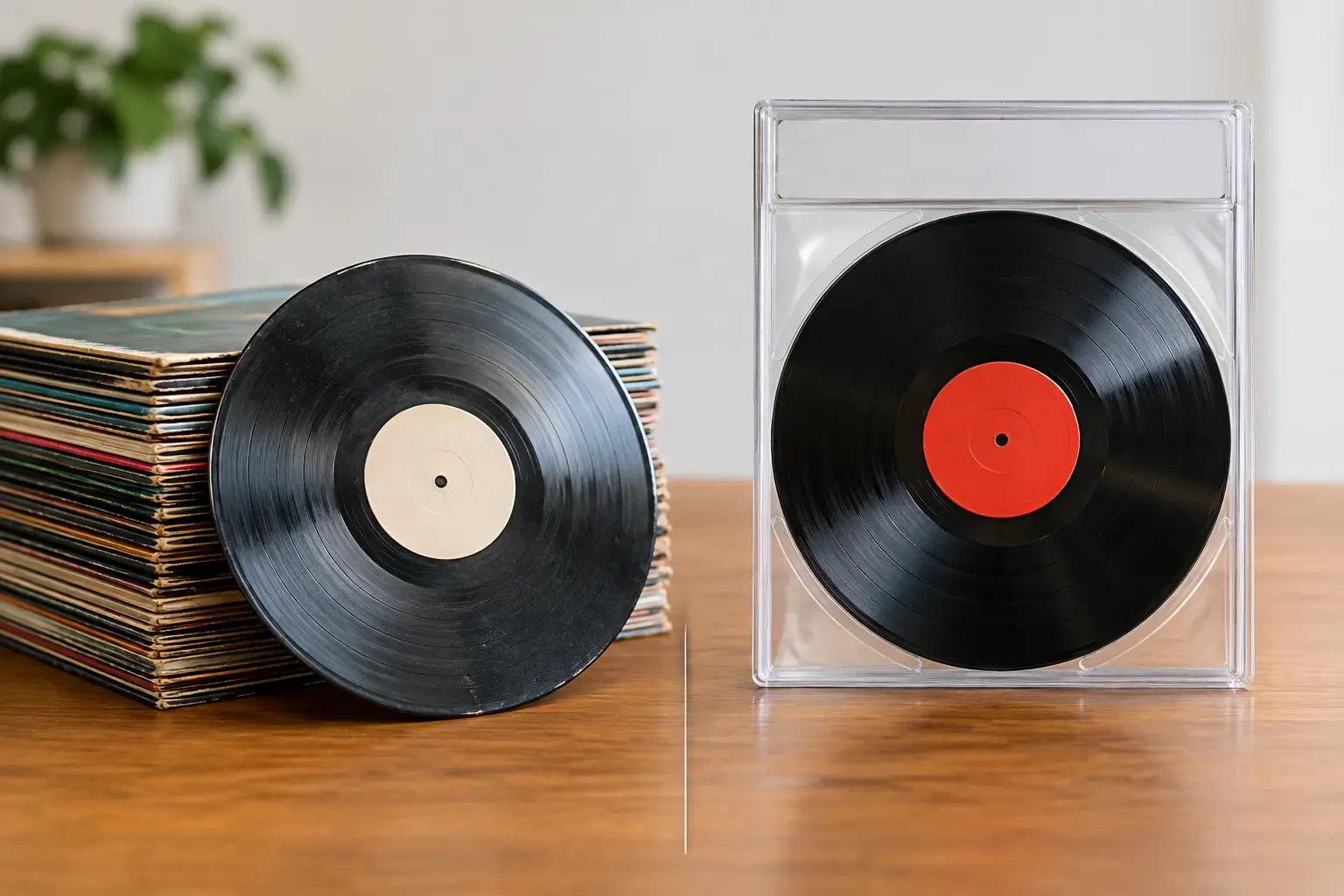
A record can look superb under a quick glance, yet reveal low-level crackle in a quiet intro, spindle wear around the label, or a sleeve seam starting to part. That is why seller graded vs collector graded is not simply a question of whether one person is stricter than another. It is about what has actually been inspected, how clearly it is described, and whether the grade matches the expectations of someone adding a meaningful copy to their collection.
For record addicts buying online, condition is part of the record’s story and part of its value. A clean first pressing with a correct sleeve, inner and labels is a different proposition from an otherwise similar copy with surface marks, a replacement inner or a clipped corner. The most useful listings make those differences easy to understand before the parcel arrives.
Seller graded vs collector graded: the real difference
Neither “seller graded” nor “collector graded” is an official condition category in the way that Mint, Near Mint, Excellent, Very Good Plus or Very Good are commonly understood. They are shorthand for two approaches to assessing a record.
A seller grade is the condition assessment given by the person listing the item. It may be careful and conservative, or it may be broad and optimistic. The words alone do not tell you which. What matters is the seller’s process, their familiarity with vinyl, and whether they separate the condition of the disc from the cover.
A collector grade generally describes the closer scrutiny a serious buyer applies. Collectors tend to consider more than whether a record plays. They look for pressing-specific details, matrix information, label variations, original printed inners, poster or booklet inclusion, storage wear, writing, tape residue, edge wear and any defect that changes desirability. They may also judge more cautiously because a record purchased for a collection needs to hold up against the copies already on the shelf.
So, collector graded does not automatically mean better condition. It usually means a more detailed standard of expectation. A seller who inspects, cleans, playtests and photographs properly can provide the kind of information collectors need, even if the listing is not labelled “collector graded”.
A grade is only useful when the details support it
The familiar grading scale is helpful, but it cannot carry a listing on its own. Two copies marked Very Good Plus can feel very different in the hand and on the turntable.
A strong seller grade identifies the item being graded. The vinyl and sleeve should have their own condition ratings, as a sharp-playing record may come in a cover with ring wear, creases or a split seam. Conversely, a tidy gatefold sleeve can house a disc with audible background noise. Combining both into one vague condition label leaves too much to chance.
It should also explain the reason for the grade. “Light sleeve scuffs visible under bright light” is more useful than “nice copy”. “Plays with occasional faint crackle between tracks” is much more helpful than “sounds great”, particularly on quieter jazz, folk or acoustic passages. A collector can decide whether that trade-off suits their budget and intended use.
Photographs matter for the same reason. Clear images of the actual front and rear sleeve, labels, spine and inserts let buyers assess the things a grade cannot fully convey. On collectible stock, photos can confirm the catalogue number, label design, country of manufacture, barcode presence and the condition of the parts most likely to affect value.
Why visual grading and playtesting are different
Visual inspection is the starting point, not the finish line. Under good lighting, an experienced seller can spot hairlines, scuffs, scratches, groove wear, warping, residue and dullness caused by poor storage or repeated handling. That tells you plenty about the record’s likely condition and helps determine whether further attention is needed.
But a surface mark does not always produce a sound, while a visually clean record can still have groove noise, distortion or a repeating click. Playtesting adds the missing evidence. It is especially valuable for high-value titles, quieter music, older pressings and any disc with marks that need interpreting.
There is a practical limit. Playing every second of every record all the way through is a significant commitment, and listings should say what has actually been tested rather than imply more than was done. A transparent note such as “playtested in full” or “spot checked, with a mark playtested” gives buyers a meaningful basis for confidence.
Cleaning is part of this picture too. Dust can disguise a record’s real performance, and a properly cleaned disc lets both seller and buyer hear its condition more accurately. Cleaning cannot repair groove damage, but it can remove the avoidable noise that leads to unfairly harsh judgement.
What collectors notice beyond the headline grade
When assessing seller graded vs collector graded records, collectors often focus on the small details that general buyers may reasonably overlook. These are not minor points when a pressing is scarce, sought after or priced as a collectable.
A serious condition description should address any relevant points such as:
- whether the record is the stated pressing and matches the catalogue details;
- the presence and condition of original inners, booklets, posters or other included pieces;
- writing, stickers, sticker residue, price labels, stamps or cut-outs;
- sleeve issues including spine wear, corner bumps, ring wear, laminate lift and seam splits; and
- label wear, spindle marks, centre-hole damage or signs of heavy handling.
Not every copy needs a dissertation. A common album in affordable, honest Very Good condition can be described clearly in a few well-chosen lines. But the more condition-sensitive or edition-specific the item, the more the listing should earn the buyer’s trust with precise observations.
Where expectations can go wrong
The biggest gap between a seller’s grade and a collector’s expectation often comes from language. Terms such as “excellent”, “immaculate” and “rare” can mean different things to different people unless the listing backs them up.
Take Near Mint. For many collectors, that suggests a record with little to no evidence of play and a sleeve that is exceptionally clean for its age. If there is a noticeable scratch, a split inner, pronounced ring wear or writing on the cover, the item may still be an enjoyable copy, but it needs a grade and description that recognise those flaws.
Very Good Plus is another common area of disagreement. It can be an excellent buying grade: clean, attractive, enjoyable and often better value than a top-condition example. Yet it is not a catch-all for every record that is not badly damaged. Audible repeated clicks, heavy marks, substantial sleeve wear or missing original components should be disclosed plainly, even where the overall grade remains fair.
Age also matters, but it should not become an excuse. Older records can survive in striking condition, and a well-loved classic can still be worth owning if it is priced and described honestly. Collectors are usually happy to accept age-related wear when they know exactly what they are getting.
How to read a vinyl listing with confidence
Start with the separate media and sleeve grades, then read the condition notes before looking at the price. Check that the catalogue number, format and edition details line up with what you are seeking. If an original inner, poster or other item matters to you, look for it in the description and photos rather than assuming it is included.
Next, give more weight to specific faults than to flattering adjectives. A seller who says “one faint click at the start of side two” has given you useful information. A seller who only says “great condition” has not. Feedback and consistency across listings can also tell you whether the grading approach is likely to be cautious and repeatable.
At WholeLottaVinyl, the aim is not to pretend that every used record is flawless. It is to make the condition clear enough that you can choose confidently, whether you want a clean player copy of a favourite album or a sharper example for a carefully built collection.
The best purchase is not always the highest grade on the page. It is the copy whose pressing, condition, completeness and price match what you want from it. Read the notes, study the photos, and let the detail guide you towards the record you will be pleased to pull from the shelf and play again.