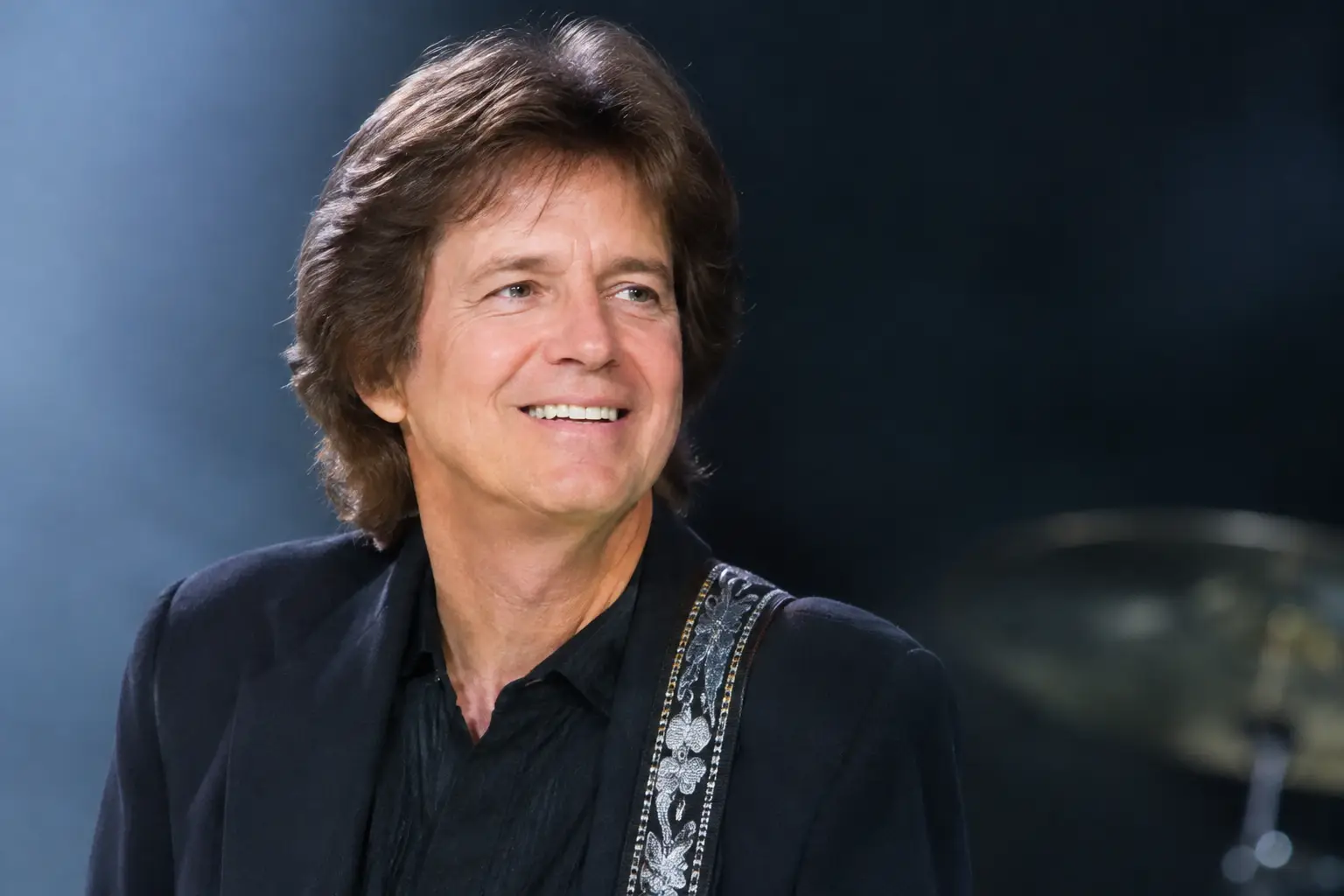
For fans marking In Memory of Tommy DeCarlo from the band Boston, the story is inseparable from the music itself: a lifelong admirer who went from singing Boston songs online to standing on stage with the group whose records had shaped him. DeCarlo, who died in 2024, brought more than a technically impressive voice to Boston’s later years. He carried the perspective of a fan who understood exactly what those songs meant in a room full of listeners.
In Memory of Tommy DeCarlo of Boston
Tommy DeCarlo’s route into Boston remains one of classic rock’s genuinely uplifting stories. After Brad Delp’s death in 2007, DeCarlo posted tribute performances online, singing songs including “More Than a Feeling” and “Don’t Look Back”. His high register and phrasing caught the attention of Boston founder Tom Scholz, and DeCarlo soon joined the touring line-up.
That was no small role to inherit. Delp’s voice is woven into the identity of Boston’s catalogue: those layered harmonies, soaring choruses and precise melodic leaps are as recognisable as Scholz’s guitar sound. A replacement could easily have felt like an imitation. DeCarlo’s strength was that he treated the material with respect while bringing a warmth that audiences could believe in.
For the record addict, there is a useful lesson in that journey. The best legacy artists are not just preserved by original line-ups or first pressings. Their music remains alive because the people closest to it understand its detail, its power and its place in listeners’ lives. DeCarlo understood all three.
The albums behind the voice
Boston’s self-titled 1976 debut is still the essential starting point. It is a record that rewards careful listening, particularly on a clean, well-set-up system. “More Than a Feeling”, “Peace of Mind”, “Foreplay/Long Time” and “Hitch a Ride” show the combination that made the band so distinctive: polished production, hard rock weight and melodies built to stay with you.
For collectors, the debut has long been a title where condition matters. Its familiar artwork makes it easy to find, but genuinely tidy examples with a clean sleeve, readable spine and a playtested disc can be a different proposition. Surface marks, groove wear and distortion during the louder vocal passages can have a real effect on the listening experience. This is precisely the sort of album that should be graded with care rather than bought on a vague description.
Don’t Look Back followed in 1978 and remains a favourite for listeners who want Boston’s sound in a shorter, punchier form. The title track, “Feelin’ Satisfied” and “It’s Easy” have the immediate lift that DeCarlo later delivered on stage. Then there is Third Stage, the 1986 return that took the group in a more considered, dramatic direction. “Amanda” became a major hit, but the album works best as a complete side-by-side listen rather than a single-track exercise.
DeCarlo also featured on Life, Love & Hope in 2013. It is not the obvious entry point for a casual buyer, and that is fair enough. The earlier albums are foundational. Yet for those following Boston’s full history, it has added interest as part of the era in which DeCarlo helped bring the band’s catalogue to audiences again.
A touring voice, not a footnote
It would be unfair to reduce DeCarlo to a piece of Boston trivia. He took on demanding songs in front of fans who knew every vocal turn, every harmony and every high note. His performances helped make the post-2007 concerts feel like celebrations rather than museum pieces.
That distinction matters. Classic rock can become overly protective of the past, especially among collectors who rightly care about original personnel, early pressings and period-correct editions. Those details matter, but so does the human connection that keeps an artist’s work meaningful. DeCarlo represented that connection unusually well: he was one of the people in the audience before he was one of the voices on the stage.
Building a Boston collection with care
A well-chosen Boston collection does not need to be complicated. Start with the debut in the best condition your budget allows, add Don’t Look Back for its directness, then Third Stage for its wider scope. From there, later releases and live-related material make sense if you are collecting the complete story rather than simply the biggest songs.
Pressing variations, country of manufacture, sleeve condition and inserts can all affect appeal, but there is no universal “best” copy. A first UK pressing may suit one collector; another may prefer a particularly clean US copy with stronger presentation. What should not be negotiable is clear grading and confidence that the disc has been properly checked. Boston’s dense production can expose crackle and tracking issues quickly.
Tommy DeCarlo’s place in Boston’s history is a reminder to play the records, not merely file them. Put on “More Than a Feeling”, turn it up enough to hear the harmony bloom, and remember the fan who got the chance to sing it back to the world.